Pais’s Electromagnetic Propulsion Proposals: Quantum Vacuum Physics and Experimental Tests
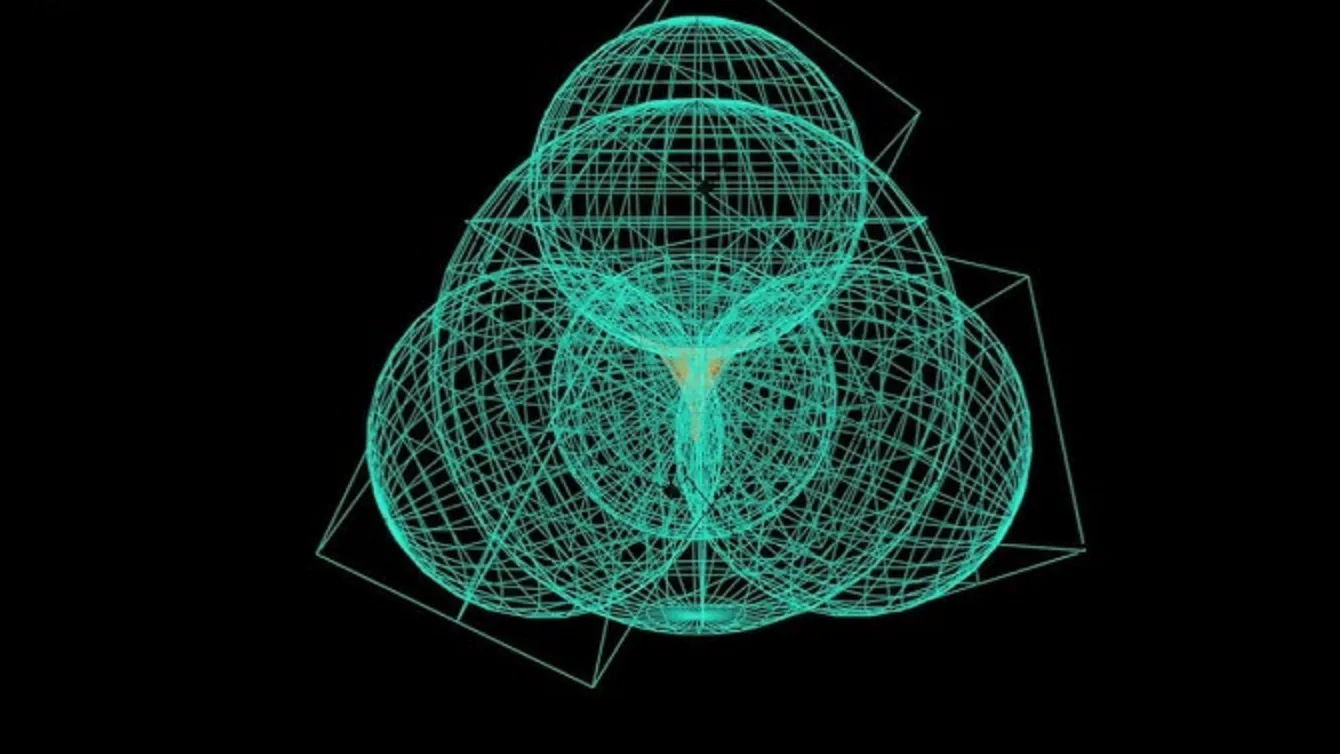
A critical evidence synthesis of vacuum physics, inertial-mass claims and the experimental standards required for advanced propulsion
Abstract
Pais’s published electromagnetic-field and propulsion proposals connect driven charged matter, vacuum polarisation and gravitational physics to prospective changes in inertia. This study evaluates that chain using sources publicly available by 3 July 2018. The published inertial-mass-reduction patent application establishes the disclosed concept and its provenance, not independently reproduced performance. Relevant experimental achievements include precision quantum-electrodynamic measurements, Casimir forces, driven photon generation and astrophysical gravitational-wave detection. Each has a defined physical interpretation; none independently demonstrates controllable inertial-mass reduction, a reactionless drive or a self-sustaining vacuum-energy source. Energy conservation, momentum accounting, field configuration, non-equilibrium thermodynamics and measurement uncertainty provide a framework for appraisal. A proposed evaluation programme separates mathematical consistency, anomalous observations, mechanism identification and engineering utility, with explicit rejection criteria at every stage. Defence and aerospace implications centre on scientific assurance, precision instrumentation and disciplined technology assessment. The public evidence reviewed supports investigation of well-specified, falsifiable questions but does not establish the extraordinary propulsion and energy capabilities asserted in these proposals. Direct equation analysis examines harmonic-motion assumptions, negative-damping growth, SI conversion, quantum-field invariants and complete energy–momentum accounts, separating mathematical concerns from missing evidence through a claim-specific red-team and blue-team assessment.
Contents
Research orientation
The assessment proceeds from definitions and primary claims to independently observed phenomena, then to the missing experimental links. Proposed validation and operational implications are considered separately. The object is to identify what would change the evidence, without allowing an attractive application to stand in for a demonstrated mechanism.
1 Research question and scope
Can controlled electromagnetic and mechanical excitation produce a reproducible change in inertial response that cannot be explained by known forces, energy exchange or measurement error? This is the central scientific question raised by Pais’s published propulsion proposals. It is narrower than asking whether unconventional propulsion is imaginable and more demanding than showing that an apparatus stores electromagnetic energy. A convincing answer requires an observable, a quantitative prediction and an experimental comparison that discriminates the proposed mechanism from ordinary physics.
Several distinct propositions are often compressed into the same narrative: a material can sustain an unusual field; the field modifies quantum processes; those modifications alter inertia; the altered inertia produces useful propulsion; and the whole system offers an energy advantage. These propositions form a chain, not a single hypothesis. Even a positive result at one link would not validate every subsequent link. The appropriate unit of evaluation is therefore the specific prediction, rather than the inventor, institutional affiliation or apparent ambition of the concept.
Pais's electromagnetic-field proposal and gravitational-wave propulsion paper provide primary descriptions of the proposed connection between driven charged matter and unusual physical effects (Pais, 2015; Pais, 2017a). Their scientific significance lies in the questions they pose and the predictions they invite. Describing a mechanism in technical language, however, does not itself establish that the required conditions can be produced or that the asserted outcome follows. This study treats the documents as proposals to be assessed, not as records of independently verified propulsion.
The scope encompasses electromagnetic energy accounting, quantum-vacuum effects, gravitational coupling, precision force measurement and the translation of a laboratory observation into aerospace capability. It does not infer classified achievements from public silence, propose a weapon architecture or estimate the performance of an unverified craft. The central contribution is an evidence framework: it shows which conclusions the reviewed material supports, which remain conditional and what observations would distinguish them.
2 Evidence selection and analytical method
This is a structured critical synthesis and a proposed evaluation framework. It is not an original laboratory experiment, a reanalysis of unpublished data or an exhaustive systematic review. Source selection followed the causal chain of the claims: originating application and publisher records; foundational physical derivations; experiments demonstrating related phenomena; independent tests of adjacent anomalous-force claims; and metrological guidance. Searches used the inventor's name, patent numbers and terms including vacuum polarisation, dynamical Casimir effect, Gertsenshtein conversion, inertial mass, passivity and anomalous thrust.
Priority was given to primary research, the original published patent application and contemporaneous institutional documents. Only material publicly available by 3 July 2018 is eligible. A filing date does not establish public disclosure, and a journal volume’s nominal year is distinguished from its actual online publication date. Publisher records, repositories and original documents were checked for authorship, title, public availability and evidence type. Where access was limited to an abstract or publisher record, the assessment is confined to what that material establishes.
The evidential categories are deliberately non-interchangeable. A theoretical derivation can establish a consequence of stated assumptions. An experiment can test a bounded prediction within a defined uncertainty. A published patent application records disclosed subject matter and proposed claims. A mission report can establish demonstrated operation in its reported environment. A peer-reviewed article may still contain a conjecture, and a technically sophisticated conjecture may remain unsupported by an independent measurement. Classification by document type prevents authority from substituting for result.
Appraisal asks whether a claim specifies a measurable quantity, preserves units, identifies its system boundary, predicts a departure from a conventional baseline and includes an uncertainty model. It also asks whether the prediction changes after seeing the data. No pooled effect size is appropriate: the cited studies examine different systems and endpoints. The proposed validation programme is this study's analytical recommendation. It is not presented as an experiment already conducted by LupoToro Group or as a protocol endorsed by the cited researchers.
3 Physical definitions and conservation
Fields, energy and power
Electric field strength, magnetic flux density, energy density and energy flux are different quantities. In vacuum, the familiar classical expressions are u = (ε0E² + B²/μ0)/2 for electromagnetic energy density and S = E × H for energy flux. Energy density is measured in joules per cubic metre; flux is measured in watts per square metre. Neither can be converted into a total power or stored energy without an area, volume and physical configuration. Poynting's energy-balance formulation relates transport, storage and work on matter; it does not supply an additional source of energy (Poynting, 1884).
The relation |E| = c|B| applies to a travelling plane electromagnetic wave in vacuum. It is not a universal constraint on electrostatic fields, cavity near fields or arbitrary superpositions. Consequently, substituting that relation into every resonant geometry can create a physically inappropriate estimate. A calculation must start from the relevant field solution and boundary conditions. Dimensional consistency is necessary, but a correctly dimensioned formula can still have an incorrect physical premise.
Resonance and system boundaries
A resonator can accumulate energy delivered over many cycles and exhibit a large local amplitude relative to a single cycle of driving. That is an enhancement of stored response, not evidence that the output energy exceeds the total supplied energy. A useful audit includes the drive, stored electrical and mechanical energy, cooling, losses and changes in the apparatus. A transient release of previously stored energy must not be compared only with the instantaneous input at the moment of release.
Far-from-equilibrium operation does not remove this obligation. Prigogine's account of dissipative structures concerns organised behaviour maintained through exchanges with an environment; it is not a general law of unlimited amplification (Prigogine, 1977). Jarzynski's work provides a different example of precise reasoning beyond equilibrium: a specified statistical relation connects work performed during a process with equilibrium free-energy differences (Jarzynski, 1997). Neither result licenses a transition from the phrase non-equilibrium to a claim of net energy creation.
Force, inertia and weight
Inertial response concerns acceleration under an applied force. Weight is a force measured in a gravitational environment. A balance indication can change because of heating, buoyancy, magnetic coupling, vibration or a change in the point of force application. Such a change cannot be relabelled as altered inertial mass without an independent dynamical measurement. Equally, a moving centre of mass can result from ordinary momentum exchange with fields, radiation or surrounding matter. The material object alone is not necessarily a closed system.
For this reason, propellantless and reactionless are not synonyms. A spacecraft may exchange momentum with incoming or emitted radiation without expelling conventional propellant. A claim of no external momentum exchange is much stronger. The distinction turns an ambiguous label into a testable boundary condition: identify every carrier and pathway of momentum before assigning an unexplained residual to a new force.
4 Primary claims and comparative evidence
What the public application establishes
The document Craft using an inertial mass reduction device was published on 2 November 2017 as US 2017/0313446 A1. Its cover identifies Salvatore Pais as inventor and the United States, represented by the Secretary of the Navy, as assignee. It associates an excited electromagnetic cavity with local vacuum polarisation and reduced inertia (Pais, 2017b). The record considered here is a published application. It supplies a primary statement of the proposed mechanism, not a controlled measurement demonstrating it.
The scientific question is whether the described mechanism produces the asserted observable. A document containing claims, diagrams and equations is not itself a replication record. Experimental confirmation would require defined conditions, calibrated measurements, appropriate comparisons and an uncertainty budget. The distinction concerns evidence of physical performance; this study makes no assessment of prospective patent rights or the outcome of examination.
The identified assignee establishes an institutional connection rather than a measured capability. The inference that affiliation guarantees physical feasibility is invalid: institutional provenance cannot supply a missing measurement. Equally, the public record does not determine the content or outcome of undisclosed work. The assessment therefore rests on the disclosed scientific argument and publicly available observations.
| Record | What is established | What remains unestablished |
|---|---|---|
| Pais’s published application | Authorship, disclosed concept and application publication date. | Independent demonstration of reduced inertia or useful propulsion. |
| Laboratory quantum-vacuum experiments | Specific, measured quantum effects under stated conditions. | A self-sustaining vacuum-energy source. |
| Astrophysical gravitational-wave observations | Signals consistent with general-relativistic source models. | A practical compact gravitational-wave drive. |
| Precision null-force experiments | Bounds on particular tested devices and conditions. | A universal experimental exclusion of every conceivable propulsion mechanism. |
Independent positive evidence
The existence of subtle quantum effects is not in dispute. Lamb and Retherford's hydrogen measurements supplied an experimentally defined discrepancy in atomic energy levels, helping establish the need for radiative corrections (Lamb and Retherford, 1947). Lamoreaux measured a Casimir force between closely spaced conducting surfaces (Lamoreaux, 1997). These achievements illustrate the value of small, clearly defined observables. They do not require accepting an additional claim about the inertia of a macroscopic craft.
Wilson and colleagues observed radiation with quantum correlations in a driven superconducting circuit, providing an experimental realisation of the dynamical Casimir effect (Wilson et al., 2011). The imposed time dependence supplies a physical drive; photon production is not evidence of a cyclic machine drawing unlimited usable energy from an unchanged vacuum. The measured output and the energetic cost of changing the system must be considered together.
Likewise, the first direct gravitational-wave detection involved a transient whose waveform matched the inspiral, merger and subsequent relaxation of two black holes (Abbott et al., 2016). It demonstrated a predicted signal from an astrophysical source. Detecting that signal does not establish that a small laboratory generator can reproduce the source's relevant dynamics or make gravitational radiation an efficient means of propulsion.
5 Vacuum physics and the limits of inference
Pair production is not spacetime rupture
Schwinger's quantum-electrodynamic analysis relates strong prescribed electromagnetic fields to vacuum polarisation and pair creation (Schwinger, 1951). The physical claim concerns particle production in a field, not the formation of a hole in spacetime, disappearance of inertia or a new energy reservoir. The resulting particles carry energy supplied by the field configuration. Treating the critical field scale as a switch that opens access to limitless energy imports conclusions absent from the underlying theory.
Field configuration matters. A large quoted intensity alone does not specify the quantum process. Lorentz-invariant combinations of electric and magnetic fields distinguish physically different cases, and an ideal isolated plane wave does not reproduce the static electric-field problem. Therefore the appearance of a large number in an electromagnetic estimate cannot, by itself, establish the onset of the desired non-perturbative mechanism.
Burke and colleagues reported positron production through a multiphoton process involving an energetic electron beam and laser radiation (Burke et al., 1997). That experiment supplies an important empirical boundary: particle creation is a specific, measurable interaction with incoming energy and momentum. It should not be described as laboratory confirmation of a self-powered vacuum generator or inertial-mass reduction. Distinguishing the measured process from a related theoretical limit is part of scientific precision.
Vacuum fluctuations and usable work
A system can exhibit quantum fluctuations without those fluctuations constituting a freely extractable work supply. Within their framework, ground states and thermal KMS states at nonnegative inverse temperature are completely passive: cyclic driving cannot extract net work from them (Pusz and Woronowicz, 1978). This result is not a claim that every quantum process is uninteresting energetically. It specifies why an energy proposal must identify the non-equilibrium resource, external work or change of state that makes extraction possible.
A Casimir arrangement can exert a force while its configuration changes. To call the process a generator, one must account for restoring the initial configuration and any other resources consumed. A useful question is therefore whether the full cycle closes, rather than whether one part of it moves or produces a signal. The same test applies to mechanical resonators, plasma discharges and superconducting circuits: a favourable partial measurement is insufficient to establish favourable complete-cycle performance.
Coherence and self-organisation
Classical phase synchronisation, quantum coherence and collective order have different experimental signatures. O'Connell and colleagues demonstrated quantum control of a mechanical resonator using a cryogenic device coupled to a qubit (O'Connell et al., 2010). The result shows that a mechanical mode can be investigated quantum mechanically under carefully characterised conditions. It does not imply that arbitrary rapid vibration creates the same state or that coherence changes gravitational mass.
The relevant research question is consequently operational: which observable excludes an adequate classical description, and how does that observable connect to the proposed mechanical effect? Calling an organised plasma coherent does not answer either question. An account of a new mechanism must specify its state, dynamics and coupling to the measured output. Otherwise the same word can conceal a shift from ordinary collective behaviour to an untested quantum-gravitational interpretation.
6 Gravitation, inertia and alternative explanations
Gertsenshtein conversion and the scale of a claim
Gertsenshtein analysed the coupling of electromagnetic and gravitational waves in a background field within weak-field general relativity (Gertsenshtein, 1962). This is a theoretical conversion mechanism with explicit assumptions about fields and propagation. Its existence does not remove the need to calculate coupling strength, account for the supplied energy and identify an observable above environmental backgrounds.
The October 2008 JASON assessment considered proposed high-frequency gravitational-wave applications and found the examined practical claims unsupported by the relevant physical scales (Eardley et al., 2008). It is not a direct replication of Pais’s apparatus. Its significance here is methodological: a formal interaction must be translated into a credible source, detector and signal-to-background assessment before a technological inference follows. An advisory assessment and a subsequently published proposal both remain distinct from the measurements needed to test a particular device.
Dimensionful scales and physical laws
The combination c⁴/G has dimensions of force. Naming it a superforce does not establish an additional interaction, an experimental energy source or a procedure for controlling curvature. Gibbons discussed a maximal-tension principle in classical general relativity involving c⁴/(4G), explicitly as a theoretical principle with arguments and qualifications (Gibbons, 2002). Such work illustrates how a scale becomes scientifically useful through a specified model. Dimensional resemblance alone cannot provide the dynamics missing from a propulsion proposal.
Evidence concerning the equivalence of inertial and gravitational response also requires careful scope. The first MICROSCOPE results, published on 4 December 2017, compared the free fall of titanium- and platinum-alloy test masses. The reported difference was consistent with zero within its statistical and systematic uncertainties (Touboul et al., 2017). This is an initial result for a specified equivalence-principle test, not a test of every driven apparatus. A proposed modification of inertia nevertheless needs to explain why its equations agree with such established observations in the regimes where they apply.
Lessons from null experiments
Anomalous balance indications have a relevant experimental history. Faller and colleagues repeated a reported spinning-gyroscope weight effect and did not find the claimed dependence on rotation (Faller et al., 1990). This result does not test Pais’s proposed electromagnetic coupling. It demonstrates the narrower point that an apparent association between actuation and a balance indication needs independent verification. Repeating a signal with the same instrument does not establish that the signal represents a new force rather than a repeatable property of the measurement system.
A competing explanation should be treated as a predictive model, not an afterthought. Thermal distortion may follow a different time course from a proposed prompt force. Environmental coupling may track geometry or support configuration. An electronic artefact may survive mechanical reversal. Distinguishing these possibilities requires several independent observables. A signal that reverses with an apparatus is informative, but reversal alone cannot exclude every mechanism that reverses with the same apparatus.
Direct equation audit: dimensional validity and physical inference
A red-team assessment should distinguish an inconsistent equation from a consistent equation with unproved premises. A blue-team assessment should identify the strongest physically coherent interpretation and what would discriminate it experimentally. The following calculations use the equations in the published application, Pais (2017b), and the SAE paper, Pais (2017a). Equation numbers refer to those sources. SI units are used throughout; angular frequency is denoted by ω and measured in radians per second, with ω = 2πf for cyclic frequency f.
The application's equation 1 has the form Smax = fG(σ²/ε0)(Rrω + Rvν + vR). Surface charge density is σ; the terms in the final bracket are proposed velocities. This expression is dimensionally compatible with energy flux: σ²/ε0 has units of pressure and pressure times velocity has units of W/m². Using the application's rotation-only inputs, with its geometric factor set to one, reproduces approximately 1.77 × 1024 W/m². Thus its quoted order of magnitude is consistent with substitution into that formula.
The substantive difficulty comes before treating the number as available power. A prescribed surface charge and motion must be supported by a Maxwell solution, a material and charge-confinement model, and an energy balance for the drive. Under an ideal locally planar conducting-boundary estimate, the same stated charge density implies E = σ/ε0 ≈ 5.65 × 10¹⁵ V/m and normal Maxwell pressure σ²/(2ε0) ≈ 1.41 × 10²⁰ Pa. These are consequences of the assumed inputs, not measurements. The expression does not establish that a macroscopic charged structure can maintain them or radiate the inferred flux. The blue-team interpretation is a candidate scaling relation to be derived for a specified driven boundary; the red-team objection is missing physical closure, rather than an arithmetic error in that substitution.
The application's equation 2 replaces the velocity scale with Rvω²top. This has velocity units but cannot represent indefinitely accumulating velocity in bounded harmonic motion. For x(t) = Rv cos(ωt), integration gives v(t) − v(0) = −Rvω sin(ωt), not Rvω²t over many cycles. Multiplying peak acceleration by operating time treats an alternating acceleration as a constant-sign acceleration. A brief transient or a driven resonance can produce growing amplitude, but that requires solving the drive, damping and back-reaction equations. The application's additional assumption that operating time is of the order of inverse displacement also needs a dimensioned coefficient; inverse metres are not seconds. Neither step supplies an independently demonstrated amplification law.
Negative damping: the growth law and its energy source
The SAE paper's equations 3–4 propose the scalings ET ∝ mRv²Ω² exp(2Ωt) and Smax ∝ (Q²/ε0)(Rv²/Rs⁵)Ω exp(2Ωt). Here Q denotes charge, rather than the resonator quality factor used elsewhere. These expressions have the dimensions of energy and energy flux respectively. Their units are not the objection. The issue is whether the stated growth law follows from the proposed dynamics and whether its pump energy is accounted for.
Pais introduces a negative-damping term proportional to velocity and states Ω = b/(2m) ≫ ω0, where ω0 is the natural frequency. For the standard linear interpretation, the equation of motion and its characteristic rates are:
When Ω < ω0, the amplitude envelope grows as exp(Ωt), with oscillation frequency √(ω0² − Ω²); an energy envelope proportional to exp(2Ωt) is then plausible. Under the stated opposite limit Ω ≫ ω0, the roots are real, the generic fast component is nonoscillatory, and λ+ ≈ 2Ω. Its energy grows as exp(2λ+t) ≈ exp(4Ωt). Thus the displayed energy exponent does not follow from this standard interpretation in the stated regime. The paper does not print a complete alternative oscillator equation that resolves this mismatch.
For an illustrative ratio Ω/ω0 = 10 and duration Ωt = 1, the exact fast-mode energy multiplier is approximately 54.05, while exp(2Ωt) is 7.39. Both are unstable-model calculations, not claims of achievable amplification. The disagreement identifies a dynamical assumption that must be resolved before extrapolation; it does not establish that a larger multiplier is physically available. A blue-team account could specify nonlinear feedback, time-dependent coefficients or a finite driven transient, but must derive its growth and saturation rather than import the envelope from a different regime.
The latter identity exposes the pump. Negative damping injects positive mechanical power, which must come from a reservoir or drive included in the apparatus ledger. It is a legitimate model of an active oscillator, not an energy source explained by the word acceleration. A finite physical model additionally needs loss, saturation, radiation reaction and limits on displacement or charge retention. The asserted charge-to-mass substitution leading to equation 4 also requires a specified field geometry and force law: the fact that the resulting expression has the correct units does not supply that derivation.
The paper's equation 5 expresses gravitational-wave conversion using a factor proportional to GB²L²/c⁴. Pais explicitly notes the missing inverse-permeability factor when SI field units are used. That recognition should be credited; it is not an overlooked error to be attributed to him. After consistent unit conversion, a dimensionless weak-gravity scale is:
For the purely illustrative values B = 10 T and L = 10 m, this scale is approximately 6.58 × 10⁻³⁵. It is not a conversion-efficiency prediction: the numerical coefficient, polarisation, geometry and phase matching require the actual field solution. It shows why an allowed interaction can be extraordinarily weak at laboratory scales. Gertsenshtein (1962) supplies a coherent theoretical avenue for electromagnetic–gravitational coupling. A blue-team model could investigate coherent enhancement within its domain; a red-team analysis must include finite coherence, supplied energy and back-reaction before extrapolating it to propulsion. Substituting an unsupported field intensity does not establish a large conversion result.
Vacuum polarisation, pair production and inertial mass
An intensity alone does not define the quantum-vacuum response. The electromagnetic invariants E² − c²B² and E · B both vanish for an ideal plane wave in vacuum, whereas an electric-dominated field has a different invariant structure. Schwinger's electric-field pair-production result therefore cannot be applied to arbitrary radiation solely by equating its Poynting flux with a nominal threshold (Schwinger, 1951). Space-time dependence and additional interacting fields matter. The positive interpretation is that strong fields can produce specific nonlinear quantum effects; the unsupported step is identifying every sufficiently large flux with the same vacuum state or with reduced inertia.
The application's equation 3 relates generated flux to pair rest energy. An energy balance can bound a pair-production rate, but it is not itself a production law. With Ṅ pairs per second and mean single-particle Lorentz factor γ, conservation requires 2γmec²Ṅ to be no greater than the supplied power plus any release of stored energy assigned to that channel. Equality assumes complete conversion and neglects other channels; the actual rate requires a field-dependent quantum calculation. Pair creation consumes energy. It does not provide an unaccounted reservoir or establish a negative contribution to the total rest energy of a closed apparatus.
The application's equation 4 also resembles the formal zero-point energy integral with an angular-frequency cutoff, ucut = ħΩ⁴/(8π²c³). The fourth power follows from integrating a vacuum mode density to a selected cutoff. It does not make that cutoff a measured excitation frequency or a controllable propulsion parameter. Equating this formal quantity to a classical field energy density supplies neither a renormalised stress-energy difference nor an equation linking the device to a change in inertial response. A physical prediction must identify the state, boundaries and measurable change, as controlled vacuum-force experiments do.
There is room for a substantive blue-team argument about quantum stress-energy. Quantum theory permits some local negative-energy states; dismissing every such possibility on classical positivity grounds would be incorrect. Ford and Roman (1995) derive restrictions connecting the magnitude and duration of negative energy under specific free-field and sampling assumptions. Those results neither provide a general engineering resource nor establish a universal bound for every driven cavity. A proposal using negative energy must identify the relevant quantum state, its preparation cost, the complete stress tensor and the applicable bounds. Pais's asserted transition from vacuum polarisation to reduced craft inertia does not supply that chain.
Conservation and a conventional quantitative baseline
For a steady resonator, the definition Q = ωU/Ploss gives U = QPloss/ω. With illustrative Q = 106, frequency 1 GHz and dissipated power 1 W, the stored energy is 1.59 × 10⁻⁴ J. Its energy-equivalent mass is approximately 1.77 × 10⁻²¹ kg. This is a positive energy contribution for the closed system, not evidence of negative inertia. The resonator may have a large circulating field while its time-averaged dissipation remains equal to the coupled drive power. Stored energy, circulated power and exported useful power must not be interchanged.
The momentum ledger must include matter, electromagnetic fields, supports and radiation crossing the chosen boundary. Perfectly collimated emitted electromagnetic power produces conventional recoil F = P/c, or approximately 3.34 nN per watt; absorbed and reflected external radiation require the corresponding incoming momentum terms. Any proposed excess thrust must be evaluated against these and other conventional forces. A force on one cavity wall is not the net force on the complete isolated apparatus. Quantum corrections can modify stresses without removing total momentum conservation.
Similarly, reducing a body's rest mass does not by itself permit superluminal motion. The positive-energy special-relativistic relation E² = p²c² + m²c⁴ gives v = pc²/E ≤ c for real non-negative mass squared, approaching c in the massless limit. Removing energy or mass at a selected speed does not supply a physical continuation to v > c. An alternative theory would need a consistent dispersion relation, dynamics and agreement with established tests. This is a failure of the proposed inference, distinct from the separate question of whether a driven device can change its measured effective response.
Claim-by-claim red-team and blue-team assessment
| Claim and evidence status | Red-team finding | Strongest blue-team position and required test |
|---|---|---|
| Large flux from charge and motion — missing physical closure | A dimensionally valid scaling does not demonstrate sustainable inputs, radiated power or confinement. | Derive the field and boundary solution, then compare calibrated input, stored energy, losses and emitted output. |
| Operating-time amplification — unsupported dynamical inference | Peak harmonic acceleration times elapsed time is not the integrated harmonic velocity. | Driven transient amplification is plausible; a damped model must predict saturation and the dependence on drive history. |
| SAE exponential growth — conditional dynamical mismatch | Units are consistent, but the stated exponent does not follow from the standard negative-damping oscillator in the stated strong-pumping regime. | Specify the actual drive equation, finite reservoir, nonlinear saturation and field-to-mechanical coupling; compare its complete predicted time trace. |
| Electromagnetic–gravitational conversion — allowed interaction, unestablished useful scale | Unit conventions and weak coupling prevent the claimed power from following from the displayed substitution. | Use a consistent conversion model with a predicted detector signal, coherence limit and complete energy budget. |
| Vacuum effects and coherence — real adjacent physics, missing device-specific evidence | Classical synchronisation is not a demonstration of a macroscopic quantum state or reduced inertia. | Driven quantum boundary effects are experimentally supported by Wilson et al. (2011); specify quantum observables that classical noise and thermal models cannot reproduce. |
| Reduced inertia or anomalous thrust — unresolved experimental claim | No disclosed independent measurement here links the proposed drive to a changed inertial mass after conventional forces are removed. | Prespecify a quantitative force or inertial-response law, perform independent dynamical and force measurements, and test its scaling against matched nuisance models. |
A balanced experiment compares explanatory models, not the number of arguments on each side. The conventional model should predict thermal, electromagnetic, mechanical and readout contributions under the same operating schedule. A proposed additional coupling must predict a residual with independently specified magnitude, sign and time dependence. Fit nuisance parameters on separate calibration data, reserve configurations for prediction, and include all failed runs. A reproducible residual that survives these comparisons would justify further investigation; a residual removed by a conventional model would constrain the anomalous claim. Neither institutional affiliation nor the ambition of the proposal substitutes for that discrimination.
7 Proposed validation programme
Theory before capability
The first proposed stage is a mathematical audit performed independently of the apparatus developer. It should state the fields, material response, approximations, boundary conditions and conserved quantities. If the model departs from established physics, the departure should be written explicitly, together with the experiments it must continue to explain. If it claims to use established physics, every step should follow from that framework without an unannounced extra coupling.
This stage should produce a prediction for a directly measurable quantity with uncertainty or a defined parameter range. A prediction that merely says an anomalous effect may appear somewhere is not falsifiable enough to justify a capability claim. Failure at the mathematical stage does not prove that no unexplained observation could exist; it means that the proposed explanation is not ready to interpret one. Conversely, a coherent derivation is permission to test a model, not evidence that nature follows it.
Predefined observations and controls
The next stage should specify an ordinary-physics baseline and a primary endpoint before data collection. The endpoint might be a bounded residual in a force or energy balance, defined in advance rather than selected from whichever measurement looks unusual. Calibration must connect the instrument to known inputs, and uncertainty must include systematic effects as well as random scatter. Established thrust-metrology practice emphasises calibration, error identification and uncertainty analysis; these principles remain relevant even when the proposed propulsion mechanism is unfamiliar (Polk et al., 2017).
Three research hypotheses organise the proposed assessment. H1 is that the claimed observable exceeds the predeclared conventional prediction and combined uncertainty. H2 is that the result survives independent measurements and changes that isolate ordinary artefacts while retaining the proposed cause. H3 is that a specified model predicts the direction and relative change of the effect in withheld conditions. H1 alone establishes at most a residual. H2 reduces the plausibility of known confounding. H3 begins to distinguish an explanatory mechanism from a descriptive anomaly.
The appropriate control is matched to the causal question. A nominally inactive device that produces very different heating is a weak comparator for a thermally sensitive measurement. An analysis that removes drift using a model fitted only to the active run may absorb or manufacture a signal. Investigators should therefore justify the control's equivalence for the relevant nuisance variables, preserve raw records and define preprocessing without knowing the condition labels where feasible.
Replication and stopping rules
Confirmation should require an independent team, independently checked calibration and a frozen analysis plan. Sharing the same apparatus, software and calibration assumptions across laboratories can reproduce the same systematic error. The aim is complementary independence: preserve the proposed physical cause while varying the measurement vulnerabilities. Successful repetition should include null controls and the full denominator of attempts, not only selected runs with an apparent effect.
Stopping rules are equally important. An experiment should be able to conclude that the predicted effect is excluded within a stated range, that the apparatus is too noisy to decide, or that an unexplained residual warrants further study. These are different outcomes. After a well-powered null result, moving the predicted operating domain without a prior theoretical reason converts a testable claim into a retreating target. Any new hypothesis should be recorded as new and assessed on fresh data.
| Stage | Evidence required | Decision permitted |
|---|---|---|
| Mathematical consistency | Explicit assumptions, units, boundaries and a falsifiable prediction. | Whether a meaningful test can be specified. |
| Controlled observation | Calibrated measurement, appropriate controls and a complete uncertainty budget. | Whether an unexplained residual is supported. |
| Independent discrimination | Replication and withheld predictions that distinguish competing causes. | Whether a proposed mechanism gains empirical support. |
| Engineering assessment | Repeatability, complete resource accounting and performance in relevant environments. | Whether a scientifically supported effect offers practical value. |
These stages should not be collapsed into a single demonstration. A small reproducible effect could be scientifically important but technologically unusable. An efficient conventional subsystem could be commercially useful while providing no evidence for the advertised exotic mechanism. Separating scientific validity from engineering value allows both discoveries to be recognised accurately.
8 Defence adjacent implications
The immediate defence relevance is the quality of technical assessment. An extraordinary claim can influence procurement, threat perception or research priorities before the underlying observation has been established. A disciplined assessment should maintain separate records for the originating claim, independent evidence, physical constraints and unresolved questions. Repetition of a claim by several outlets does not create several independent experiments.
Institutional provenance deserves the same separation. A published application identifying a defence organisation as assignee can motivate examination of a research direction. It does not establish deployment, operational advantage or a classified breakthrough. The defensible public conclusion must remain bounded by the public evidence reviewed, with unobserved programme activity left uncharacterised.
A useful assurance process would ask whether the claimed effect has a measured signature, whether a proposed explanation adds predictive power and whether the asserted capability survives complete system accounting. Reviewers should retain uncertainty without converting it into alarm. An unknown mechanism is not automatically an unknown threat of unlimited magnitude. Scenario work can explore conditional consequences, but should label the conditions and keep them distinct from an assessed capability.
Independent replication also protects innovative programmes. A credible negative result can prevent resources being committed to an artefact, while a credible positive result is stronger when a sceptical team can reproduce it. The assessment role is therefore neither advocacy nor categorical dismissal. It is to create a decision record in which progression depends on evidence that competing explanations have had a fair opportunity to fail.
The transferable benefits are practical even if the strongest propulsion claims remain unsupported: improved sensor calibration, thermal characterisation, electromagnetic compatibility and documentation of experimental uncertainty. Those capabilities have ordinary scientific and engineering value. Their value should be assessed directly, without making it depend on the eventual success of an inertial-mass or vacuum-energy interpretation.
9 Aerospace engineering and human factors
Comparison with demonstrated propulsion
Established propulsion provides a useful conceptual comparison. JAXA's account of IKAROS reports solar-sail acceleration and navigation using sunlight (JAXA, 2011). The spacecraft can be propellantless in that operating mode because it exchanges momentum with an external radiation field. This demonstrates that unconventional-looking propulsion need not violate conservation laws. It also shows why an explicit interaction with an external environment differs fundamentally from a closed-device reactionless claim.
Before an anomalous effect could enter mission design, engineers would need a performance envelope, repeatable control response and failure behaviour. A single force measurement would not answer questions about reliability, thermal rejection, power supply, disturbance rejection or lifetime. The relevant comparison is between complete systems performing the same mission, including support equipment and inactive periods. A favourable component-level ratio is not necessarily a favourable spacecraft-level result.
Measurement models and control
A flight-control system must distinguish a physical acceleration from an erroneous sensor indication. If a proposed field-driven device also perturbs its sensors, the controller could respond to its own actuation artefact. Research should therefore examine measurement independence before proposing closed-loop operation. A claimed benefit that appears only in one instrument channel is not sufficient evidence of a change in the vehicle's trajectory.
Simulation can help examine such distinctions, provided it does not assume the disputed effect as a validated input. A model may be used to ask what observations would discriminate competing mechanisms or how uncertainty propagates through a mission calculation. It cannot establish the existence of the mechanism it was programmed to contain. Hypothetical performance should remain a conditional input until independent measurements support it.
Human interpretation and assurance
Human factors arise in the interpretation of extraordinary signals as well as in future operation. Displays that present a derived quantity as a direct measurement can conceal the assumptions needed to calculate it. An experimental dashboard should distinguish recorded sensor values, calibrated estimates and model-dependent inferences. A label such as inferred mass change should remain tied to the force model and uncertainty that generated it.
Aerospace research programmes also benefit from clear handover between scientific and engineering teams. Scientists should specify what an experiment actually establishes; engineers should identify which additional properties a mission requires. Neither group should silently enlarge the result during that handover. This is particularly important where a theoretically interesting effect is discussed in terms of dramatic manoeuvring, crew protection or interstellar travel. Such applications require many independent demonstrations beyond the existence of the initial effect.
10 Interpretation and research priorities
The reviewed evidence supports the reality of electromagnetic energy transport, quantum-vacuum phenomena, controlled quantum mechanical motion and gravitational radiation. It also supports the existence of published proposals connecting these subjects to advanced propulsion. It does not establish the additional chain from those phenomena to controllable inertial-mass reduction, self-sustaining vacuum-energy extraction or a practical reactionless craft.
The most consequential gaps are evidential and inferential, not merely a shortage of ambitious applications. They include a complete model for the claimed coupling, a reproducible primary observable, an adequate uncertainty budget, independent mechanism discrimination and full resource accounting. Each gap can be stated as a research question. None is closed by citing another established phenomenon whose physical role in the proposed device remains unspecified.
The preferred research priority is a sequence of modest but decisive tests. Mathematical consistency should precede apparatus claims; controlled observations should precede mechanism claims; independent predictions should precede capability claims. An unexplained result should remain unexplained until a model earns explanatory status. A null result should be reported with its sensitivity and domain rather than inflated into a universal verdict.
This approach leaves room for discovery while protecting scientific credibility. The strongest contribution of a critical study is not to make an extraordinary claim sound more certain. It is to identify the observation that could make the claim more certain, the alternatives that observation must exclude and the limits that would remain after it succeeds.
Appendix A Evidence and inference audit
| Observation or statement | Permitted interpretation | Additional evidence needed |
|---|---|---|
| A resonator has a large local response | Energy has accumulated or been redistributed under its driving conditions. | Complete-cycle accounting before claiming a net energy source. |
| A balance signal follows actuation | The actuation and instrument output are associated. | Independent force and inertial-response measurements with confounding excluded. |
| A quantum effect is observed | The specified quantum prediction is supported within the experiment. | A measured causal connection to the proposed propulsion effect. |
| A patent application has been published | The identified concept has a public disclosure record. | Independent experimental validation of the claimed physical performance. |
| A force-scale combination has correct units | The expression is dimensionally compatible with a force. | A predictive dynamical law and an experimentally confirmed coupling. |
The tables are analytical summaries, not new experimental results. For numerical claims, an accompanying record should identify the measured quantity, its units, the uncertainty definition, the system boundary and the source of every input. Significant figures should reflect measurement precision. A large theoretical scale is not a measured operating point, and a result stated without its uncertainty cannot establish the size of an anomaly.
Appendix B Reproducible analytical supplement
Download the analytical supplement: dimensional, dynamical and conservation calculations. The archive includes the complete Python source, explicit inputs and expected JSON output. It uses only the standard library. Running python reproduce.py reproduces the calculations and checks their defining identities. The results are conditional mathematical calculations; the inputs are not presented as measured device, workforce or biological performance.
References
Abbott, B.P. et al. (2016) ‘Observation of gravitational waves from a binary black hole merger’, Physical Review Letters, 116, 061102. Source.
Burke, D.L. et al. (1997) ‘Positron production in multiphoton light-by-light scattering’, Physical Review Letters, 79, pp. 1626–1629. Source.
Eardley, D. et al. (2008) High Frequency Gravitational Waves. JASON report JSR-08-506. McLean, VA: The MITRE Corporation. Source.
Faller, J.E., Hollander, W.J., Nelson, P.G. and McHugh, M.P. (1990) ‘Gyroscope-weighing experiment with a null result’, Physical Review Letters, 64, pp. 825–826. Source.
Gertsenshtein, M.E. (1962) ‘Wave resonance of light and gravitational waves’, Soviet Physics JETP, 14(1), pp. 84–85. Source.
Gibbons, G.W. (2002) ‘The maximum tension principle in general relativity’, Foundations of Physics, 32, pp. 1891–1901. Source.
Japan Aerospace Exploration Agency (JAXA) (2011) ‘Reflecting on the Hayabusa mission and the future of space exploration’, JAXA TODAY, 3, January. Source.
Jarzynski, C. (1997) ‘Nonequilibrium equality for free energy differences’, Physical Review Letters, 78, pp. 2690–2693. Source.
Lamb, W.E. Jr and Retherford, R.C. (1947) ‘Fine structure of the hydrogen atom by a microwave method’, Physical Review, 72, pp. 241–243. Source.
Lamoreaux, S.K. (1997) ‘Demonstration of the Casimir force in the 0.6 to 6 μm range’, Physical Review Letters, 78, pp. 5–8. Source.
O’Connell, A.D. et al. (2010) ‘Quantum ground state and single-phonon control of a mechanical resonator’, Nature, 464, pp. 697–703. Source.
Pais, S.C. (2015) ‘The high energy electromagnetic field generator’, International Journal of Space Science and Engineering, 3(4), pp. 312–317. Published online 12 April 2016. Source.
Pais, S.C. (2017a) ‘High frequency gravitational waves – induced propulsion’, SAE Technical Paper 2017-01-2040. Source.
Pais, S.C. (2017b) Craft using an inertial mass reduction device. US Patent Application Publication US 2017/0313446 A1, 2 November. Source.
Polk, J.E. et al. (2017) ‘Recommended practice for thrust measurement in electric propulsion testing’, Journal of Propulsion and Power, 33(3), pp. 539–555. Source.
Poynting, J.H. (1884) ‘On the transfer of energy in the electromagnetic field’, Philosophical Transactions of the Royal Society of London, 175, pp. 343–361. Source.
Prigogine, I. (1977) Time, Structure and Fluctuations. Nobel Lecture, 8 December. Source.
Pusz, W. and Woronowicz, S.L. (1978) ‘Passive states and KMS states for general quantum systems’, Communications in Mathematical Physics, 58, pp. 273–290. Source.
Schwinger, J. (1951) ‘On gauge invariance and vacuum polarization’, Physical Review, 82, pp. 664–679. Source.
Touboul, P. et al. (2017) ‘MICROSCOPE mission: first results of a space test of the equivalence principle’, Physical Review Letters, 119, 231101. Published 4 December. Source.
Wilson, C.M. et al. (2011) ‘Observation of the dynamical Casimir effect in a superconducting circuit’, Nature, 479, pp. 376–379. Source.
Ford, L.H. and Roman, T.A. (1995) ‘Averaged energy conditions and quantum inequalities’, Physical Review D, 51, pp. 4277–4286. Source.