High-Energy Laser Weapons: Megawatt-Class Claims, Mobile Integration and Evidence
A critical study of optical power, system maturity, measurement and aerospace assurance
Abstract
This study evaluates what publicly documented high-energy laser research establishes about the prospect of mobile megawatt-class systems. It distinguishes optical-source output, integrated platform performance and sustained operational capability, which are frequently conflated in power-based comparisons. Historical chemical-laser demonstrations establish that megawatt-class optical emission and a controlled airborne intercept are physically achievable; they do not establish an equivalent capability in a compact electrically powered platform. Solid-state and fibre technologies offer a different integration pathway, but thermal management, optical quality, atmospheric variability, maintenance and safe control remain coupled constraints. Primary programme records, optical research, metrology and assurance guidance are assessed through a claim-specific evidence framework. A proposed validation programme prioritises independently calibrated measurements, representative operating conditions, configuration control, repeatability and human oversight. The central conclusion is that a power milestone becomes scientifically and operationally meaningful only when its measurement boundary, duration, environment and supported inference are explicit.
Contents
Research orientation
The analysis moves from definitions and verified evidence to competing explanations, research design and independently assessable defence and aerospace implications.
1 Research question and intellectual scope
The central question is not whether intense coherent optical radiation can produce physical effects. That proposition has experimental support. The question is what additional evidence is required before a high-power laboratory result can support a claim about a mobile, repeatable and supportable system. The adjective “mobile” is itself ambiguous: equipment may be transportable between prepared sites, integrated on a moving platform, or operable throughout that platform’s normal environment. Those are different engineering claims and should be assessed separately.
Three propositions organise the study. First, an optical source can produce a stated output under specified conditions. Second, an integrated platform can reproduce relevant performance while meeting its power, thermal, structural and control requirements. Third, an organisation can sustain that performance safely with ordinary personnel, maintenance arrangements and supply support. Evidence for the first proposition is necessary for some applications, but it cannot establish the other two by definition. A large source on a laboratory bench and a smaller source operated reliably in service therefore cannot be ranked using output alone.
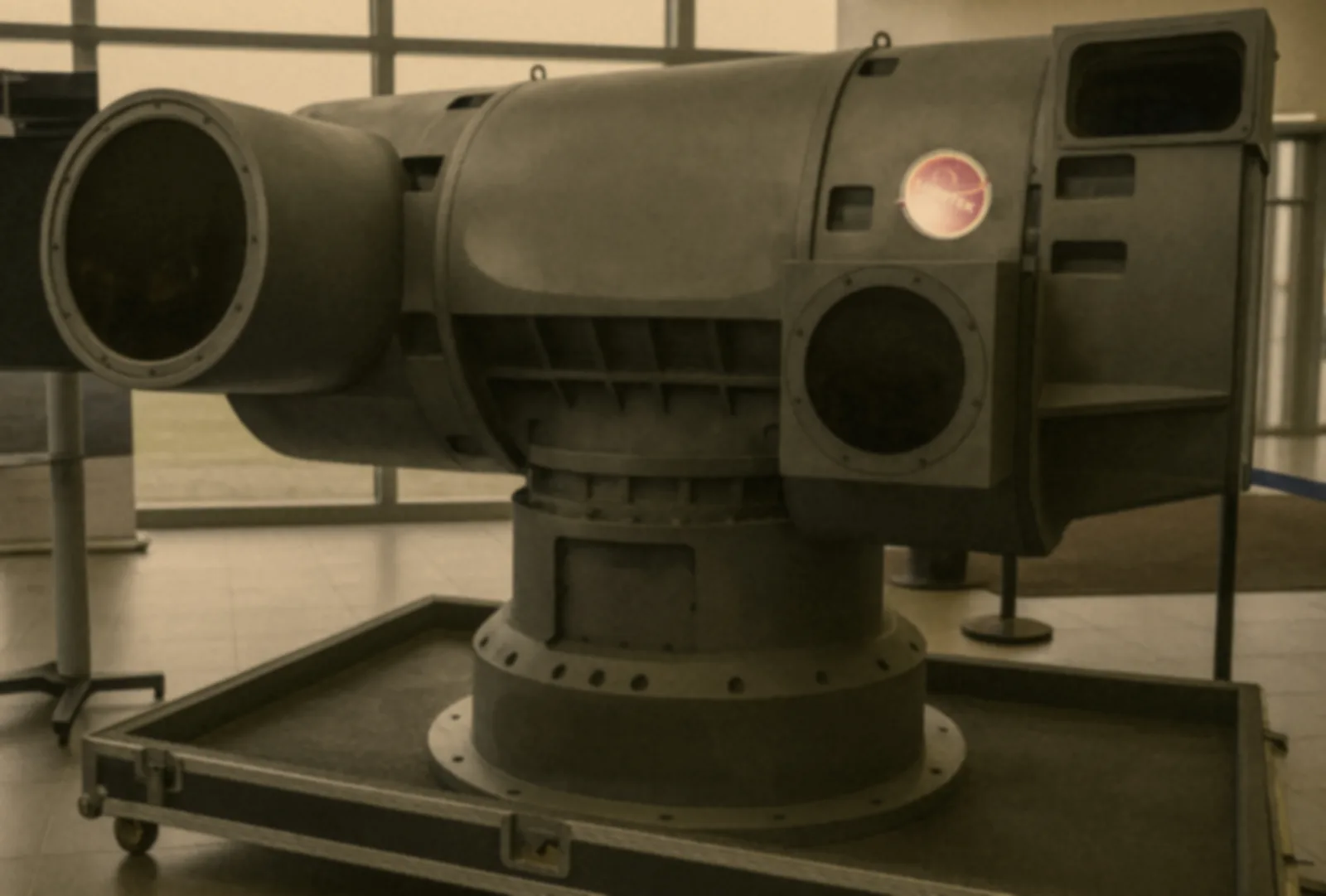
The analysis treats “megawatt-class” as a power descriptor, not a readiness category. It also distinguishes a demonstrated historical chemical-laser capability from a proposed electrically driven capability. The publicly documented Airborne Laser Test Bed used a megawatt-class chemical oxygen-iodine laser in a modified Boeing 747; a contemporaneous Air Force report describes its final ferry flight and transfer for storage in February 2012 (Fabara, 2012). Neither the size of that aircraft nor the success of a particular experiment determines the feasibility of another platform.
LupoToro Group’s contribution here is analytical: a structured comparison of evidence, assumptions and assurance requirements. No proprietary laser prototype, laboratory campaign or field trial is claimed. Research possibilities are identified as proposals and linked to observations that could support or reject them. This preserves the distinction between an organisation publishing a study and an organisation having experimentally demonstrated the capabilities under discussion.
The scope covers historical foundations, selected public demonstrations, system constraints, evidence quality and non-operational validation. It does not derive engagement ranges, material damage thresholds, attack parameters or new weapon architectures. These omissions do not weaken the assessment of scientific maturity: the decisive question remains whether a stated claim is supported by measurements at the level at which it is being made.
2 Evidence selection and analytical method
This is a structured critical synthesis, not a new experiment, a classified capability assessment or an exhaustive systematic review. The evidence base comprises original optical research, primary programme statements, independent public audit reports, metrology studies and published safety or systems-engineering guidance. Searches addressed laser history, source scaling, environmental propagation, measurement uncertainty, technology transition, verification, aviation safety and legal review. Claims are attributed to the year of the cited source; a historical announcement is not silently treated as the current status of a programme.
Source type affects what can be inferred. An original experiment can establish a measured result within its apparatus and uncertainty. A programme announcement can establish what the responsible organisation reported, but may omit failed trials, selected conditions or unavailable raw data. An independent audit can identify process deficiencies without measuring optical performance. A roadmap establishes an intended development path. A safety guideline defines an assessment framework; it does not certify a particular device. These categories are complementary rather than interchangeable.
NASA distinguishes verification of specified requirements from validation that a product fulfils its intended purpose in its intended environment (NASA, 2017). This distinction is adopted as an organising principle. The present study adds a separate deployment claim: an operational organisation must be able to preserve the validated configuration and sustain its performance. That extension is a proposed analytical framework, rather than a new readiness standard.
Numerical performance claims are retained only when the quantity, date and relevant boundary are clear. No pooled effectiveness percentage is calculated because public reports generally lack comparable event denominators, failure classifications and operating distributions. Nor is a probability of success inferred from a demonstration video. Such a video can document an event; it does not reveal the full sampling process or provide an independent estimate of reliability.
The review also distinguishes absence of public evidence from evidence of absence. An unverified capability is not declared physically impossible. Conversely, classification, proprietary restrictions or anticipated future improvements cannot substitute for evidence in a public scientific argument. A claim may remain unresolved without being either endorsed or rejected absolutely.
The primary unit of appraisal is therefore the claim, not the programme name. For every material proposition, the reader should be able to identify the stated observation, its source, its measurement boundary and the inference made from it. This prevents a credible historical achievement from being used to validate unrelated forecasts about future systems.
3 Optical foundations and quantities that must remain distinct
Maiman’s ruby experiment demonstrated stimulated optical emission in a solid medium and helped establish the experimental foundation of laser science (Maiman, 1960). It did not establish the later engineering package associated with a high-energy platform. The historical importance of the result lies in the realised physical mechanism, not in an implication that every subsequent application was immediately practical.
Laser architectures should be described by their gain medium, pumping arrangement and output characteristics without assuming that one family has permanently displaced all others. A rare-earth-doped silica fibre is not the same material as a doped crystalline garnet. Likewise, using semiconductor diodes to pump another gain medium is different from using their emission directly. Richardson, Nilsson and Clarkson (2010) explain why fibre geometry supports efficient high-brightness output while also documenting thermal, nonlinear and damage constraints. This supports a nuanced assessment of fibre technology, not an unrestricted scaling claim.
Power and energy answer different questions. Power is a rate of energy transfer; energy accumulates over time. Peak power, average power and the power sustained over an explicitly stated observation interval can differ substantially. A report of a very short high-power pulse therefore cannot be substituted for evidence of continuous output at the same stated power. The units alone are insufficient: the temporal definition is part of the result.
Further distinctions are equally important. Electrical input is not optical output. Output measured near a source is not the optical field after a variable propagation path. A source efficiency is not the efficiency of an entire installation that includes auxiliary equipment. A nominally coherent beam does not guarantee the same optical quality under changing thermal and mechanical conditions. Comparisons that omit these boundaries can be numerically correct yet scientifically misleading.
Beam quality describes spatial and angular properties that affect the usefulness of emitted power. It is not synonymous with the total power registered by a detector. A system can produce more total light while distributing it differently. Similarly, measurement at one instant may conceal drift or instability. A meaningful performance record therefore needs compatible measurements of output, optical quality and time, obtained from the same declared configuration.
The inference problem is general. A larger value of a source-level quantity may improve one component of performance while increasing demands elsewhere. Whether the overall result improves is an empirical question about the integrated system. The correct comparison is not a contest between isolated maxima; it is a comparison of reproducible performance within stated constraints.
| Quantity or description | What it establishes | What remains separate |
|---|---|---|
| Optical output | Emitted power within a defined measurement interval | Integrated platform performance and availability |
| Peak output | An instantaneous or short-duration maximum | Sustained average output |
| Source efficiency | Conversion within a stated boundary | Auxiliary loads and whole-platform resource use |
| Transportable equipment | Ability to move between locations | Performance during movement or across environments |
| Successful demonstration | An observed result under reported conditions | Reliability across unobserved conditions |
4 Historical demonstrations and comparative evidence
The strongest historical lesson is that physically impressive demonstrations can coexist with unresolved acquisition and integration questions. The U.S. Air Force’s contemporaneous account of the February 2010 Airborne Laser Testbed event described a successful intercept as a proof-of-concept demonstration (U.S. Air Force, 2010). That formulation matters. It identifies an achieved experimental event while leaving open the requirements for a practical, sustained capability.
A chemical source and an electrically driven solid-state source should not be treated as interchangeable steps on a single power curve. Their energy supply, maintenance arrangements and platform interactions differ. A historical achievement by one architecture establishes neither the packaging nor the support requirements of another. It is therefore inappropriate to write that compact mobile megawatt-class electrical systems have been demonstrated merely because an earlier chemical system achieved a megawatt-class output.
DARPA’s 2015 HELLADS announcement reported acceptance for field testing following laboratory work (DARPA, 2015). This is a concrete transition milestone. Its evidential value is neither zero nor equivalent to operational qualification. It indicates that the programme met criteria for the next test phase. Subsequent performance, maintenance experience and acceptance by a user organisation require their own records.
The Navy’s official description of its May 2020 USS Portland test records the disabling of an unmanned aerial vehicle using a solid-state laser demonstrator at sea (U.S. Navy, 2020). An at-sea demonstration adds a different integration context from a laboratory test. However, the public description does not provide a full distribution of environmental conditions, attempted trials, interruptions or long-term support demand. Those missing quantities prevent a reliable universal effectiveness estimate.
Development schedules require similar discipline. The 2024 Congressional Research Service report records Department of Defense ambitions to increase laser output and improve size, weight, optical quality and efficiency (Sayler et al., 2024). These are documented objectives, not a certificate that every projected milestone has been achieved. A forecast should remain labelled as a forecast until an identifiable result supports the transition from planned to demonstrated status.
Taken together, the examples support a positive but bounded conclusion: several forms of high-energy laser research have progressed beyond abstract proposals. They do not establish one universal design, an all-weather capability or an inevitable schedule for compact megawatt-class deployment. The evidence is strongest when a particular configuration, event and date are kept together.
A comparative study must also resist survivorship bias. Widely circulated successful demonstrations are easier to find than routine maintenance records or unsuccessful development paths. That asymmetry does not invalidate the successes, but it means the public record is a selected sample. A responsible assessment uses such records to establish milestones and identify research questions, rather than to estimate a hidden population of operational outcomes.
| Record | Supported observation | Inference boundary |
|---|---|---|
| Maiman, 1960 | Stimulated optical emission demonstrated in ruby | Foundational physics, not platform readiness |
| Airborne Laser Testbed, 2010 | Officially reported airborne proof-of-concept intercept | Specific experiment, not compact electrical-system validation |
| HELLADS, 2015 | Laboratory acceptance for field testing | Eligibility for another evaluation phase |
| USS Portland, 2020 | Officially reported at-sea demonstrator event | Public account lacks full reliability denominator |
| Department of Defense roadmap, reported 2024 | Stated source-scaling and integration objectives | Future objective, not achieved milestone |
5 System integration and environmental dependence
The scientific object of interest changes when a source becomes part of a platform. The source depends on supplied energy, controlled temperatures and mechanical stability; the platform also supports sensing, communication, personnel and other equipment. A resource available to one subsystem may therefore have an opportunity cost elsewhere. Treating the supporting platform as an unlimited external resource conceals part of the problem being assessed.
Thermal management is especially important conceptually. Conversion losses must be accommodated, but the relevant requirement is not simply whether heat can be removed during one demonstration. It is whether the declared operating sequence can be repeated without unacceptable drift, interruption or maintenance. Temporary storage of heat and sustained rejection of heat are distinct functions. A favourable brief test cannot establish long-duration equilibrium performance unless that condition was actually examined.
Atmospheric propagation creates a second boundary between source performance and application performance. Fried’s theoretical work relates statistical wave distortion to optical resolution and shows why different observation durations can yield different results (Fried, 1966). It provides a foundation for treating the propagation path as a variable part of the measurement system. It does not, by itself, predict the performance of a particular high-energy installation.
Environmental compensation should therefore be described as conditional capability. Correcting one type of distortion does not remove every form of absorption, scattering, occlusion or sensor uncertainty. “Adaptive” is a description of a control function, not an exemption from physical limits. An assessment should ask which disturbances were measured, which were compensated, and which remained outside the demonstrated operating envelope.
Mechanical integration creates further dependencies. Alignment can change after transport, maintenance or temperature cycling. A configuration that has been carefully adjusted by development engineers may differ from one maintained by ordinary users. These possibilities motivate controlled tests; they are not claims that a particular fielded system has failed. The important methodological point is that configuration and operating history belong in the evidence record.
A useful reporting approach is to present performance as a distribution over declared conditions rather than as a single maximum. Conditions that are unevaluated should remain visibly unevaluated. Conditions that inhibit safe operation should be recorded as limits, not omitted from an availability denominator. This makes a system’s operational boundary scientifically legible and prevents favourable-condition sampling from being mistaken for generality.
6 Measurement, causal inference and competing explanations
A reported improvement can have several explanations: the source may genuinely perform better; the measurement method may have changed; environmental conditions may have become more favourable; the configuration may include different auxiliary equipment; or the result may reflect a selected interval. Distinguishing these explanations requires a stable comparison design. A larger reported number does not identify its own cause.
Metrology offers a concrete warning against treating calibration as context-free. Williams et al. (2017) compared onsite and laboratory approaches to multikilowatt power-meter calibration and found that operating conditions could materially affect the measured calibration factor. The relevant lesson is not to prescribe a particular instrument, but to retain traceability, environmental records and uncertainty estimates when comparing results obtained in different settings.
Taylor and Kuyatt (1994) distinguish uncertainty evaluated from statistical observations from uncertainty evaluated through other information. Both can matter. Repeated readings can quantify some variation while leaving a shared calibration error unresolved. Reporting only the scatter of repeated observations may therefore create unwarranted confidence. A useful record identifies the measurand, measurement model, principal uncertainty contributions and interpretation of the reported interval.
Causal interpretation requires equal attention to the denominator. A successful outcome among trials that proceeded is different from availability across all scheduled opportunities. A system that frequently declines to operate for safety or maintenance reasons may have excellent conditional performance yet limited overall availability. Neither figure should be concealed. They answer different questions and should be reported together.
Several rival explanations should be considered before attributing a change to the technology itself. Did the tested environment change? Were unsuccessful attempts reclassified after the fact? Was a trained development team replaced by ordinary users? Did the assessment use the same definition of completion? Was the comparator allowed the same maintenance and preparation time? These are proposed appraisal questions, not allegations about the cited programmes.
The broader inference is that uncertainty has both physical and institutional components. Instrument calibration addresses the former; transparent trial accounting, independent adjudication and predeclared endpoints address the latter. Neither replaces the other. A precise measurement inside a selectively reported test campaign can be as misleading as an unbiased campaign using inadequately characterised instruments.
7 Proposed validation programme and falsifiable hypotheses
A credible research programme should test claims at the level where they are intended to be used. The following programme is proposed; no results are claimed. It is concerned with metrology, reliability, safe inhibition and supportability, using appropriately authorised facilities and qualified personnel. It does not require publishing operational weapon settings or exposing people to hazardous radiation.
Hypothesis one is that independently calibrated source measurements remain consistent, within declared uncertainty, when repeated across relevant approved environments and after routine maintenance. The alternative is that environment or configuration changes create systematic discrepancies. A blinded comparison of instrument records and configuration logs could distinguish these explanations. A predeclared disagreement criterion would trigger investigation rather than retrospective adjustment of the acceptance rule.
Hypothesis two is that a specified integrated configuration preserves its required performance over a representative operating and maintenance schedule. The endpoint would include interruptions, recovery time, unplanned interventions and reasons for inhibited operation. A successful short trial would not count as a substitute for completion of the declared schedule. Failure to preserve performance would narrow the supported operating claim, even if the source continued to achieve a favourable maximum.
Hypothesis three is that operators can correctly identify the system’s mode, limitations and safe state under realistic workload. Evaluation could use simulation and recorded data, with no live hazardous output required. The comparison would distinguish raw task completion from appropriate decisions to inhibit or stop an operation. A system should not receive a favourable score merely because operators proceed quickly when the information available does not justify proceeding.
The design should separate exploratory work from confirmatory assessment. Exploratory trials can identify failure modes and improve instrumentation. Confirmatory trials should use a frozen protocol and declared configuration, with changes logged and their implications assessed. Data used to tune a model should not also be presented as independent validation of that model. A later test set should challenge the assumptions most likely to fail outside the development setting.
Sampling should cover conditions in proportion to the claim being made. If the intended claim spans multiple environments, the programme should not concentrate exclusively on the easiest one. Where full physical testing is impractical, modelling may support coverage, but its calibration range and uncertainty must be disclosed. Simulation can extend understanding; it cannot transform an untested assumption into an observed fact.
Governance should include an independent reviewer who can inspect failed and incomplete trials, not only the selected summary. Safety-related interruptions should remain in the record. Procurement decision makers should receive both a performance statement and a boundary statement: what has been shown, for which configuration, under which conditions, and what remains untested.
GAO’s technology readiness guidance emphasises credible, objective and reliable evidence about maturity and integration (GAO, 2020). The proposed programme applies that principle through claim-specific endpoints rather than assigning an impressive readiness label to an incompletely described system. A hypothesis is useful precisely because a well-conducted test could show it to be false.
8 Defence adjacent governance and acquisition implications
The acquisition problem is broader than the physics problem. GAO’s 2023 examination of seven directed-energy efforts identified difficulties in moving prototypes towards acquisition and recommended clearer transition arrangements and operational feedback (GAO, 2023). Those findings describe the reviewed programmes and period; they do not establish the status of every directed-energy effort. Their enduring analytical relevance is the need for identifiable users, responsibilities and evidence requirements.
A proposed acceptance framework would distinguish technical maturity, manufacturing repeatability, support capacity and user acceptance. These should not be collapsed into a single score. A scientifically successful prototype may be unsuitable for a particular organisation because maintenance, training or infrastructure requirements exceed what that organisation can sustain. Conversely, a modest technical capability may be useful when its limits are well understood and its support arrangements are reliable.
Economic comparisons also need explicit boundaries. The marginal energy cost of an operation is not the lifetime cost of the capability. A defensible comparison includes acquisition, integration, maintenance, personnel, infrastructure, downtime and eventual replacement, using the same accounting horizon for alternatives. The proposed research priority is transparent sensitivity analysis, not a universal claim that one technology is always cheaper.
Legal review is a separate necessary discipline. For States party to Additional Protocol I, Article 36 review addresses whether a new weapon, means or method of warfare would be prohibited in some or all circumstances; the ICRC’s guidance emphasises both design and expected use (ICRC, 2006). A technical demonstration cannot answer that legal question.
For States bound by Protocol IV, Article 1 prohibits using or transferring laser weapons specifically designed to cause permanent blindness to unenhanced vision as a sole or additional combat function. Article 2 requires all feasible precautions to prevent such blindness when employing laser systems (States Parties, 1995). Its provision concerning incidental effects does not create a general exemption from other applicable obligations. The scientific contribution is to make foreseeable effects and uncertainty available to qualified reviewers, rather than to treat a nominal system category as a legal conclusion.
9 Aerospace safety, human factors and wider engineering transfer
Aerospace applications intensify the importance of integrated assurance. Payload allocation, electrical demand, thermal conditions and maintenance access interact with the host vehicle’s other functions. Demonstrating an optical source on the ground does not establish that the same package can be integrated safely into an aircraft. A platform-level claim requires evidence about the combined system, including conditions in which the optical equipment should remain inactive.
Civil aviation guidance also illustrates why absence of structural damage is an inadequate safety endpoint. CASA’s guidance on laser emissions near aerodromes considers hazards to pilots and measures for preventing accidental exposure, while the FAA’s outdoor-laser circular addresses assessment of operations affecting navigable airspace (CASA, 2024; FAA, 2022). These documents concern their defined civil contexts; they are not military-system certifications. They nevertheless demonstrate that visual interference and airspace coordination require separate assessment from source output.
Human exposure assessment must use the appropriate optical-radiation framework. ICNIRP’s laser guidance addresses eye and skin protection with wavelength- and duration-dependent limits and defined scope (ICNIRP, 2013). A system cannot be called safe merely because it uses non-ionising radiation, nor can a biological safety conclusion be drawn from electrical efficiency. The proposed assurance programme should treat health protection as a distinct claim supported by qualified assessment.
The most defensible wider transfers concern measurement, control transparency and maintenance evidence. Industrial processing, optical communication and remote sensing also benefit from knowing when calibration has drifted, whether a model remains within its validated domain and whether an operator can identify an inhibited state. These are methodological transfers; they do not imply identical hardware or hazards across sectors.
A useful aerospace research hypothesis is that an interface showing current limits and reasons for inhibition improves operator decisions relative to an interface displaying only a readiness indicator. This could be tested in simulation using predeclared scenarios and independent scoring. It would evaluate a specific human-factors claim without assuming that greater automation is inherently safer or that machine classification is equivalent to human judgement.
The broader objective is a system whose uncertainty remains visible to its users. Safe integration depends not only on what a device can do, but also on whether it can recognise and communicate when the conditions supporting that capability no longer hold.
10 Interpretation and research priorities
Public evidence supports high-energy laser research as an established technical field with consequential experimental achievements. It also supports a more demanding interpretation of mobile megawatt-class claims than a power-based headline permits. Historical chemical systems, solid-state demonstrators and future scaling objectives occupy different positions in the evidence record. They should be connected through explicit reasoning, not treated as interchangeable proof.
The most valuable research priorities are therefore not confined to higher source output. They include reproducible metrology, environmental characterisation, transparent interruption accounting, maintainable configurations, representative user evaluation and independently inspectable evidence. Progress in these areas can change a deployment assessment even when the headline power remains unchanged.
The proposed framework is deliberately falsifiable. If independently repeated tests show that a configuration preserves required performance, safe control and supportability across its declared conditions, the supported claim should expand. If performance depends on undeclared preparation, selective trial exclusion or conditions outside the intended environment, the claim should contract. Scientific confidence should track the evidence rather than the ambition of the programme.
A mature publication should ultimately enable a reader to answer four questions: what was measured, what was demonstrated, what is inferred, and what remains proposed. Keeping these questions distinct produces a more useful account of high-energy laser systems than either technological dismissal or unconditional optimism.
Appendix A Evidence and inference audit
The following audit is a reporting framework, not a new experimental dataset. It identifies common inferential substitutions and the additional evidence needed to avoid them. It should be read alongside the specific qualifications in the main text.
| Claim being assessed | Insufficient substitute | Required evidential distinction |
|---|---|---|
| Sustained optical performance | A peak output figure | Time interval, configuration and uncertainty |
| Mobile integrated capability | A transportable source | Platform-level validation in declared conditions |
| Repeatable availability | A successful selected trial | All scheduled trials, interruptions and recovery |
| Affordable capability | Energy cost alone | Comparable lifetime cost boundary |
| Safe use | Non-ionising classification | Qualified exposure, environmental and control assessment |
| Mature deployment | A roadmap or prototype award | Dated acceptance and support evidence |
For quantitative reporting, preserve the denominator associated with each rate. Completion among initiated trials, availability across scheduled time and successful task performance across all eligible opportunities are different measures. Report their definitions before comparing them. No numerical value is supplied here because the reviewed public records do not provide a consistent dataset from which such estimates could be responsibly calculated.
Source-level confidence and system-level confidence should also be recorded separately. A well-calibrated optical measurement may have low uncertainty while the extrapolation to another environment remains poorly constrained. Combining these into one unexplained confidence figure hides the weakest part of the argument. The appropriate response to incomplete evidence is a narrower claim and a targeted validation question.
LupoToro Group holds no special government clearance or licence for directed-energy weapons and has no intent to develop or deploy operational weapons or other controlled technologies. This publication is provided for educational purposes and expresses editorial analysis and opinion. It does not constitute professional advice, certification or a guarantee of technical performance, safety, suitability or outcome.
References
Civil Aviation Safety Authority (CASA) (2024) Laser emissions which may endanger the safety of aircraft. Advisory Circular AC 139.E-03, version 1.0, December. https://www.casa.gov.au/laser-emissions-which-may-endanger-safety-aircraft.
Defense Advanced Research Projects Agency (DARPA) (2015) HELLADS laser achieves acceptance for field testing. 21 May. https://www.darpa.mil/news/2015/hellads-laser-field-testing.
Fabara, J. (2012) Airborne Laser Test Bed bids adieu to Edwards. 95th Air Base Wing Public Affairs, 21 February. https://www.edwards.af.mil/News/AFMC-News/Article/153722/airborne-laser-test-bed-bids-adieu-to-edwards/.
Federal Aviation Administration (FAA) (2022) Outdoor laser operations. Advisory Circular AC 70-1B, 14 February. https://www.faa.gov/documentLibrary/media/Advisory_Circular/AC.70-1B_Outdoor.Laser.Operations.pdf.
Fried, D.L. (1966) ‘Optical resolution through a randomly inhomogeneous medium for very long and very short exposures’, Journal of the Optical Society of America, 56(10), pp. 1372–1379. https://doi.org/10.1364/JOSA.56.001372.
International Commission on Non-Ionizing Radiation Protection (ICNIRP) (2013) ‘ICNIRP guidelines on limits of exposure to laser radiation of wavelengths between 180 nm and 1,000 μm’, Health Physics, 105(3), pp. 271–295. Corrected version incorporating the 2020 erratum. https://www.icnirp.org/cms/upload/publications/ICNIRPLaser180gdl_2013_2020.pdf.
International Committee of the Red Cross (ICRC) (2006) ‘A guide to the legal review of new weapons, means and methods of warfare: measures to implement Article 36 of Additional Protocol I of 1977’, International Review of the Red Cross, 88(864), pp. 931–956. https://www.icrc.org/sites/default/files/external/doc/en/assets/files/other/irrc_864_icrc_geneva.pdf.
Maiman, T.H. (1960) ‘Stimulated optical radiation in ruby’, Nature, 187, pp. 493–494. https://doi.org/10.1038/187493a0.
National Aeronautics and Space Administration (NASA) (2017) NASA Systems Engineering Handbook. Revision 2. NASA/SP-2016-6105 Rev2. Published 17 February. https://ntrs.nasa.gov/citations/20170001761.
Richardson, D.J., Nilsson, J. and Clarkson, W.A. (2010) ‘High power fiber lasers: current status and future perspectives’, Journal of the Optical Society of America B, 27(11), pp. B63–B92. https://doi.org/10.1364/JOSAB.27.000B63.
Sayler, K.M., DiMascio, J., Feickert, A. and O’Rourke, R. (2024) Department of Defense directed energy weapons: background and issues for Congress. Congressional Research Service, R46925, 11 July. https://www.everycrsreport.com/files/2024-07-11_R46925_4c1e5a38ad3d6906a3ea03e0972e08d8979659f3.html.
States Parties to the Convention on Certain Conventional Weapons (1995) Protocol on Blinding Laser Weapons (Protocol IV). Adopted 13 October. Reproduced by the ICRC. https://www.icrc.org/sites/default/files/external/doc/en/assets/files/other/icrc_002_0811.pdf.
Taylor, B.N. and Kuyatt, C.E. (1994) Guidelines for evaluating and expressing the uncertainty of NIST measurement results. NIST Technical Note 1297, 1994 edition. https://nvlpubs.nist.gov/nistpubs/Legacy/TN/nbstechnicalnote1297.pdf.
U.S. Air Force (2010) Airborne laser testbed successful in lethal intercept experiment. 12 February. https://www.af.mil/News/Article-Display/Article/117634/airborne-laser-testbed-successful-in-lethal-intercept-experiment/.
U.S. Government Accountability Office (GAO) (2020) Technology readiness assessment guide: best practices for evaluating the readiness of technology for use in acquisition programs and projects. GAO-20-48G, 7 January; reissued 11 February 2020. https://www.gao.gov/products/gao-20-48g.
U.S. Government Accountability Office (GAO) (2023) Directed energy weapons: DOD should focus on transition planning. GAO-23-105868, 17 April. https://www.gao.gov/products/gao-23-105868.
U.S. Navy (2020) USS Portland conducts Laser Weapon System Demonstrator test. Commander, U.S. Pacific Fleet Public Affairs, 22 May. https://www.navy.mil/Press-Office/News-Stories/display-news/Article/2283997/uss-portland-conducts-laser-weapon-system-demonstrator-test/.
Williams, P.A., Hadler, J.A., Simonds, B.J. and Lehman, J.H. (2017) ‘Onsite multikilowatt laser power meter calibration using radiation pressure’, Applied Optics, 56(34), pp. 9596–9600. https://doi.org/10.1364/AO.56.009596.