
Gauge Theory, Topology and Strongly Coupled Quantum Fields
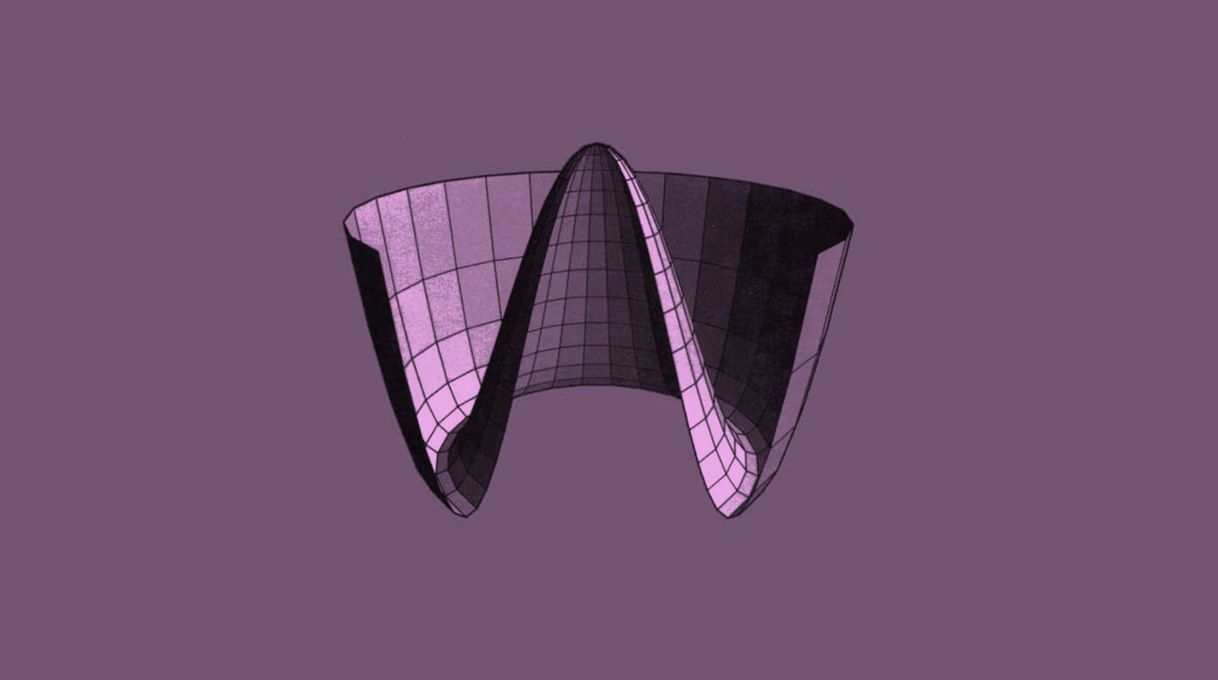
This report argues that gauge theory is a unified framework in which local redundancy, global topology, anomalies, and strong-coupling dynamics together explain monopoles, theta terms, instantons, confinement, chiral symmetry breaking, lattice regularization, large-$N$ behavior, and lower-dimensional dualities across high-energy and condensed-matter physics.
This report develops a comprehensive technical account of gauge theory as the structural framework underlying local interactions, topological sectors, and strongly coupled quantum dynamics. The central viewpoint of the Deep Research Team is that gauge invariance is not a conventional global symmetry acting on physically distinguishable states, but rather a local redundancy of description required in order to formulate interacting relativistic quantum theories with manifest locality, Lorentz covariance, and unitarity. Once this redundancy is taken seriously at both the local and global level, a rich set of physical consequences follows: quantization of magnetic charge, topological vacuum sectors, instanton tunneling, theta dependence, anomaly constraints, confinement, chiral symmetry breaking, and duality.
The analysis begins with Abelian gauge theory, where magnetic monopoles show that gauge potentials must be understood patchwise rather than globally. Dirac quantization follows from single-valuedness of charged matter, and the Abelian theta term provides the prototype for topological response, induced electric charge on monopoles, and nontrivial discrete-symmetry structure. This framework is then generalized to non-Abelian Yang-Mills theory, where self-interacting gauge bosons generate asymptotic freedom and strong infrared dynamics. Wilson loops, 't Hooft lines, instantons, and topological charge become the natural observables and sectors through which the non-perturbative content of the theory is expressed.
The report develops confinement and phase structure using electric and magnetic probes, with special attention to line operators, center structure, screening, and the global form of the gauge group. It then studies anomalies from multiple complementary viewpoints, including current non-conservation, path-integral measure non-invariance, Dirac zero modes, and topological index theory. Gauge anomalies are shown to be obstructions to consistency, while global anomalies and 't Hooft anomalies place exact constraints on the infrared.
A substantial part of the report is devoted to non-perturbative tools. Lattice gauge theory is analyzed as a regulator preserving gauge symmetry exactly at finite spacing; strong-coupling expansion reveals confinement, while the fermion doubling problem and the Nielsen-Ninomiya obstruction expose the subtlety of chiral matter. Chiral symmetry breaking in QCD-like theories is then treated using order parameters, Goldstone dynamics, the chiral Lagrangian, baryonic solitons, and anomaly matching. The large-$N$ expansion is presented as a topological reorganization of gauge dynamics, naturally suggesting an emergent string interpretation.
The report concludes by examining gauge theories in $1+1$ and $2+1$ dimensions, where many strongly coupled mechanisms become explicit and calculable. Bosonization, compact QED$_3$, Chern-Simons terms, parity anomalies, and particle-vortex duality are shown to be lower-dimensional realizations of the same fundamental interplay among local redundancy, topology, and quantum dynamics. The overall conclusion is that gauge theory must be understood not as a perturbative formalism alone, but as a unified synthesis of geometry, topology, anomaly, and strong coupling.
This high-level report uses LaTeX math delimiters.
1. Introduction
1.1 Conceptual Premise
Gauge theory is the natural language for describing fields whose local variables contain redundancy. This redundancy is not an arbitrary mathematical decoration. It is the mechanism by which a quantum field theory can be written in terms of local fields while retaining Lorentz invariance and avoiding unphysical polarizations. In electromagnetism, the vector potential $A_\mu$ contains more components than the physical photon; gauge symmetry removes the unphysical content. In Yang-Mills theory the same structure persists, but the gauge field becomes matrix-valued, self-interacting, and topologically rich.
The central scientific premise of this study is that the physically meaningful content of gauge theory lies not in gauge-variant local fields by themselves, but in gauge-invariant observables, topological sectors, response functionals, and the global structure of the underlying bundle. Once this broader perspective is adopted, a coherent explanation emerges for phenomena that otherwise appear disconnected: magnetic charge quantization, theta periodicity, confinement, anomaly matching, and the existence of solitons, instantons, and dual descriptions.
1.2 Scope of the Study
This report synthesizes the provided gauge-theory study into a single unified research document. The scientific scope includes:
Abelian gauge theory, magnetic monopoles, and topological theta terms.
Non-Abelian Yang-Mills theory, large gauge transformations, and topological vacua.
Instantons and semiclassical non-perturbative effects.
Renormalization-group flow and asymptotic freedom.
Confinement, Wilson loops, 't Hooft lines, center structure, and screening.
Smooth monopoles in spontaneously broken non-Abelian theories.
Anomalies, zero modes, and topological constraints.
Lattice gauge theory and chiral fermions.
Chiral symmetry breaking, low-energy QCD, and the chiral Lagrangian.
Large-$N$ dynamics.
Gauge theories in lower dimensions, including bosonization and Chern-Simons theory.
1.3 Methodological Approach
The report uses a combination of methods:
differential-geometric interpretation of gauge fields as connections,
canonical and path-integral quantization,
semiclassical saddle-point analysis,
renormalization-group reasoning,
anomaly analysis,
effective field theory,
topological classification,
and lattice regularization.
The unifying principle is that strong-coupling quantum field theory becomes intelligible only by combining these perspectives rather than privileging one formalism alone.
2. Electromagnetism as the Foundational Gauge Theory
2.1 Magnetic Monopoles and the Failure of Global Potentials
Classical electromagnetism is usually written in terms of electric and magnetic fields satisfying $$ \nabla \cdot \mathbf{E} = \rho, \qquad \nabla \times \mathbf{B} - \frac{\partial \mathbf{E}}{\partial t} = \mathbf{J}, $$ $$ \nabla \cdot \mathbf{B} = 0, \qquad \nabla \times \mathbf{E} + \frac{\partial \mathbf{B}}{\partial t} = 0. $$
The final pair is usually enforced by introducing a gauge potential $A_\mu = (\phi, \mathbf{A})$ such that $$ \mathbf{B} = \nabla \times \mathbf{A}, $$ $$ \mathbf{E} = -\nabla \phi - \frac{\partial \mathbf{A}}{\partial t}. $$ If $\mathbf{A}$ is assumed to be globally smooth, then automatically $$ \nabla \cdot \mathbf{B} = 0. $$ A magnetic monopole of charge $g$, however, would require $$ \mathbf{B} = \frac{g}{4\pi} \frac{\hat{\mathbf{r}}}{r^2}, $$ for which $$ \int_{S^2} \mathbf{B} \cdot d\mathbf{S} = g. $$ This field cannot arise from a single globally smooth vector potential. The correct lesson is not that the monopole is impossible, but that the vector potential must be interpreted patchwise. One may define $\mathbf{A}_N$ on a northern patch and $\mathbf{A}_S$ on a southern patch, with the two related on the overlap by a gauge transformation. Gauge fields are therefore most naturally understood as local representatives of a connection on a fiber bundle.
2.2 Dirac Quantization
On the overlap of the two patches the gauge potentials differ by $$ A_N - A_S = d\lambda. $$ A particle of electric charge $e$ transforms as $$ \psi \mapsto e^{i e \lambda / \hbar} \psi. $$ Single-valuedness of the wavefunction requires $$ \frac{e}{\hbar} \oint d\lambda = 2\pi n, \qquad n \in \mathbb{Z}, $$ which yields the Dirac quantization condition $$ eg = 2\pi \hbar n. $$ Thus quantization of magnetic charge is a topological consistency condition rather than a separate empirical postulate. The monopole and the gauge potential together force the quantum theory to recognize global topology.
2.3 Dyons and Mutual Charge Quantization
If particles may carry both electric and magnetic charge, then consistency of their mutual Aharonov-Bohm phases requires the Dirac-Zwanziger condition $$ e_1 g_2 - e_2 g_1 = 2\pi \hbar n, \qquad n \in \mathbb{Z}. $$ The electric-magnetic charge spectrum is therefore organized into a lattice with symplectic pairing. This becomes especially important once theta terms are introduced and monopoles acquire electric charge.
2.4 Angular Momentum of the Charge-Monopole System
A static electric charge $e$ and magnetic charge $g$ produce a field configuration carrying angular momentum in the electromagnetic field. The angular momentum density is $$ \mathbf{l} = \mathbf{r} \times (\mathbf{E} \times \mathbf{B}), $$ and the total field angular momentum is proportional to $eg$. The fact that the electromagnetic field itself stores quantized angular momentum gives a second physical route to the Dirac condition and demonstrates that topological field configurations have direct mechanical consequences.
2.5 The Abelian Theta Term
Maxwell theory in four dimensions admits the additional action term $$ S_\theta = \frac{\theta e^2}{32\pi^2} \int d^4x\, \epsilon^{\mu\nu\rho\sigma} F_{\mu\nu}; F_{\rho\sigma}. $$ In differential-form notation, $$ S_\theta = \frac{\theta e^2}{8\pi^2} \int F \wedge F. $$ Since: $$ F \wedge F = d(A \wedge F) $$, locally in the absence of singularities, this term does not alter the local bulk equations of motion in topologically trivial situations. However, it is physically meaningful whenever boundaries, nontrivial bundles, or magnetic monopoles are present.
2.6 Witten Effect and Theta Periodicity
In the presence of magnetic charge, the theta term induces electric charge so that monopoles become dyons. The shifted electric charge spectrum is $$ q = e \left( n + \frac{\theta}{2\pi} \right), \qquad n \in \mathbb{Z}. $$ This is the Witten effect in Abelian form. The parameter $\theta$ is periodic, $$ \theta \sim \theta + 2\pi, $$ provided the dyonic charge lattice is properly included.
2.7 Discrete Symmetry Structure
Under parity and time reversal, $$ F \wedge F \mapsto - F \wedge F, $$ so that $$ \theta \mapsto -\theta. $$ Accordingly, $P$ and $T$ can be exact only when $$ \theta = 0 \mod 2\pi $$ or $$ \theta = \pi \mod 2\pi. $$ This Abelian example foreshadows the discrete anomaly and vacuum-structure questions that become central in Yang-Mills theory.
3. Yang-Mills Theory
3.1 Gauge Fields and Curvature
For a compact gauge group $G$, the gauge field is Lie-algebra valued, $$ A_\mu = A_\mu^a T^a, $$ with field strength $$ F_{\mu\nu} = \partial_\mu A_\nu - \partial_\nu A_\mu - i [A_\mu, A_\nu]. $$ In differential-form notation, $$ F = dA - i A \wedge A. $$ The Yang-Mills action is $$ S_{\mathrm{YM}} = -\frac{1}{2g^2} \int d^4x\, \mathrm{tr}(F_{\mu\nu}F^{\mu\nu}). $$ The commutator term in $F$ implies self-interactions among gauge bosons. This is the structural feature that distinguishes Yang-Mills theory from Maxwell theory and makes asymptotic freedom possible.
3.2 Gauge Transformations and Physical Observables
Gauge transformations act as $$ A_\mu \mapsto U A_\mu U^{-1} + i U \partial_\mu U^{-1}, $$ $$ F_{\mu\nu} \mapsto U F_{\mu\nu} U^{-1}. $$ These transformations relate equivalent descriptions. Local gauge-variant quantities are therefore not themselves observables. In non-Abelian theory even the electric and magnetic fields are gauge covariant rather than gauge invariant. The physical observables are gauge-invariant composites and nonlocal holonomy operators.
3.3 Wilson Lines and Loops
For a path $C$, the Wilson line is $$ W(C) = \mathrm{tr}\, P \exp\left( i \int_C A \right), $$ where $P$ denotes path ordering. Closed Wilson loops measure the holonomy of the gauge connection and serve as the fundamental probes of confinement, screening, and long-distance order.
3.4 Non-Abelian Theta Term
The Yang-Mills theta term is $$ S_\theta = \frac{i\theta}{8\pi^2} \int \mathrm{tr}(F \wedge F). $$ For finite-action Euclidean configurations the topological charge is $$ Q = \frac{1}{8\pi^2} \int \mathrm{tr}(F \wedge F) \in \mathbb{Z}. $$ The path integral thus weights topological sectors by $$ e^{i\theta Q}. $$ The existence of nontrivial bundles and finite-action configurations with integer $Q$ makes the theta parameter physically unavoidable.
3.5 Large Gauge Transformations and Vacuum Structure
Gauge transformations need not be homotopically trivial. Large gauge transformations carry winding number, and the space of vacuum configurations breaks into sectors labeled by this winding. The physical vacuum is a superposition of topological sectors, $$ |\theta\rangle = \sum_{n \in \mathbb{Z}} e^{i n \theta} |n\rangle. $$ This is the non-Abelian theta vacuum. It is the precise field-theoretic expression of the fact that topology survives quantization.
4. Instantons and Topological Tunneling
4.1 Self-Duality and the Action Bound
In Euclidean signature the Yang-Mills action can be rewritten as $$ S_{\mathrm{YM}} = \frac{1}{2g^2} \int \mathrm{tr}(F \wedge \star F). $$ Using $$ \mathrm{tr}(F \wedge \star F) = \frac{1}{2} \mathrm{tr}\big( (F \pm \star F) \wedge \star (F \pm \star F) \big) \mp \mathrm{tr}(F \wedge F), $$ one finds the bound $$ S_{\mathrm{YM}} \geq \frac{8\pi^2}{g^2} |Q|, $$ saturated when $$ F = \pm \star F. $$ Such self-dual or anti-self-dual configurations are instantons.
4.2 Semiclassical Weight
An instanton of charge $Q=1$ contributes a factor $$ \exp\left( -\frac{8\pi^2}{g^2} + i\theta \right) $$ to the Euclidean path integral. This contribution is invisible order by order in perturbation theory and is therefore genuinely non-perturbative.
4.3 Collective Coordinates
The one-instanton sector in $SU(2)$ has moduli associated with position $x_0^\mu$, size $\rho$, and global gauge orientation. The semiclassical contribution therefore includes integration over a modulispace measure. Small instantons are governed by the asymptotically free ultraviolet, while large instantons are sensitive to strongly coupled infrared physics.
4.4 Physical Effects of Instantons
Instantons mediate tunneling between topological vacua, generate theta dependence, and induce fermionic correlation functions through zero modes. They also produce non-perturbative violation of anomalous axial symmetries and supply a direct semiclassical realization of anomaly physics.
5. Renormalization Group and Asymptotic Freedom
5.1 Running Coupling
For a gauge theory with $N_f$ fermions in representation $R$, the one-loop beta function is $$ \beta(g) = \mu \frac{d g}{d\mu} = -\frac{g^3}{16\pi^2} \left( \frac{11}{3} C_2(G) - \frac{4}{3} N_f T(R) \right) + \cdots. $$ When $$ \frac{11}{3} C_2(G) > \frac{4}{3} N_f T(R), $$ one has $$ \beta(g) < 0, $$ so the theory is asymptotically free.
5.2 Physical Interpretation
The negative sign of the beta function reflects anti-screening: unlike charged matter, gauge bosons themselves carry the non-Abelian charge and polarize the vacuum in a way that enhances long-distance flux rather than suppressing it. This explains why non-Abelian interactions grow stronger in the infrared.
5.3 Dimensional Transmutation
Classically the theory is scale invariant in the massless limit, but quantum effects generate a scale $$ \Lambda \sim \mu \exp\left( -\frac{8\pi^2}{b_0 g^2(\mu)} \right), $$ with $$ b_0 = \frac{11}{3} C_2(G) - \frac{4}{3} N_f T(R). $$ This phenomenon, dimensional transmutation, is the origin of the strong scale in QCD-like theories.
6. Confinement, Screening, and Phase Structure
6.1 Wilson-Loop Criterion
For a rectangular Wilson loop of spatial extent $R$ and Euclidean time extent $T$, $$ \langle W(R,T) \rangle \sim e^{-T V(R)}. $$ A linearly confining potential, $$ V(R) \sim \sigma R, $$ produces area-law behavior, $$ \langle W(R,T) \rangle \sim e^{-\sigma R T}. $$ This means that the electric flux between external charges is collimated into a flux tube of tension $ \sigma$.
6.2 Magnetic Disorder Operators
The magnetic dual of the Wilson loop is the 't Hooft line, which inserts prescribed singular magnetic flux. Wilson and 't Hooft operators diagnose how the vacuum responds to electric and magnetic probes and together provide a dual classification of phases.
6.3 Dual Superconductor Picture
A heuristic mechanism for confinement is dual superconductivity. In an ordinary superconductor magnetic fields are expelled and confined to quantized flux tubes; in a dual superconductor magnetic objects condense, and electric flux is squeezed into strings. Although not the most general formulation of confinement, this picture captures the physical intuition behind linear flux-tube formation.
6.4 Global Form of the Gauge Group
A non-perturbative gauge theory is not determined solely by its Lie algebra. The global form of the gauge group controls which Wilson lines are genuine, which magnetic charges are allowed, and what topological sectors exist. Thus $SU(N)$ and $SU(N)/\mathbb{Z}_N$ may have identical local field equations but distinct operator spectra and global physics.
6.5 Center Symmetry and Dynamical Matter
In pure Yang-Mills theory center symmetry acts on Wilson lines and helps characterize confinement. With dynamical matter in representations that can screen external charges, Wilson loops may lose their status as exact order parameters. The distinction between Higgs and confining regimes may then become analytically connected. A correct classification must therefore track line operators, screening, center symmetry, and anomaly structure together.
7. Smooth Monopoles in Broken Non-Abelian Gauge Theory
7.1 Higgsed $SU(2)$ Theory
Consider $SU(2)$ gauge theory coupled to an adjoint scalar $\phi$ with action $$ S = \int d^4x \left[ -\frac{1}{2g^2} \mathrm{tr}(F_{\mu\nu} F^{\mu\nu}) + \frac{1}{g^2} \mathrm{tr} (D_\mu \phi)^2 - \frac{\lambda}{4} \left( \mathrm{tr}\,\phi^2 - \frac{v^2}{2} \right)^2 \right]. $$ A vacuum expectation value $$ \langle \phi \rangle = \frac{v}{2} \sigma^3 $$ breaks the gauge group as $$ SU(2) \to U(1). $$
7.2 Topological Classification of Monopoles
Finite-energy configurations must approach the vacuum manifold at spatial infinity. The Higgs field therefore defines a map $$ \phi : S^2_\infty \to S^2, $$ classified by $$ \pi_2(S^2) = \mathbb{Z}. $$ This integer is the monopole charge. Unlike the Dirac monopole, the 't Hooft-Polyakov monopole is smooth at the core.
7.3 BPS Structure and Dyonic Extension
In special limits the monopole equations simplify to first-order Bogomolny equations, $$ \mathbf{B} = D \phi. $$ The solutions are topological solitons with finite mass and magnetic charge. Inclusion of the theta term induces electric charge, turning monopoles into dyons and providing a smooth realization of the Witten effect.
8. Anomalies
8.1 Chiral Anomaly in Four Dimensions
For a classically conserved axial current $j_A^\mu$, quantum effects produce $$ \partial_\mu j_A^\mu = \frac{e^2}{16\pi^2} \epsilon^{\mu\nu\rho\sigma} F_{\mu\nu} F_{\rho\sigma} $$ in the Abelian case. In non-Abelian form, $$ \partial_\mu j_A^\mu = \frac{1}{16\pi^2} \mathrm{tr}(F_{\mu\nu} \widetilde{F}^{\mu\nu}), $$ up to the appropriate representation coefficient.
8.2 Path-Integral Measure and Triangle Diagram
The anomaly has two complementary derivations. In perturbation theory it appears in the one-loop triangle amplitude. In the path-integral formalism it arises because the fermion measure is not invariant under chiral rotation. These two derivations agree exactly, showing that the anomaly is a genuine property of the quantum theory.
8.3 Dirac Zero Modes and Index Theory
In an instanton background the Dirac operator develops chiral zero modes. The Atiyah-Singer index theorem relates the net chirality to topological charge: $$ \mathrm{index}(\slashed{D}) = n_+ - n_- = Q, $$ up to representation-dependent normalization. This provides a rigorous bridge between topological charge and anomalous current violation.
8.4 Gauge Anomalies
Gauge anomalies are inconsistent because gauge redundancy is necessary to project out unphysical states. A four-dimensional chiral gauge theory must therefore satisfy exact cancellation of all gaugeanomaly coefficients.
8.5 Global and Non-Perturbative Anomalies
There also exist global anomalies not visible in ordinary perturbative expansions, such as the mod-two anomaly of $SU(2)$ with an odd number of Weyl doublets. These are equally fatal to consistency.
8.6 't Hooft Anomalies and Infrared Constraints
Global anomalies do not render a theory inconsistent but instead constrain its infrared realization. The low-energy theory must reproduce the same anomaly through one or more of the following: massless excitations, spontaneous symmetry breaking, topological field theory, or another nontrivial infrared mechanism.
8.7 Discrete and Higher-Form Symmetry
The anomaly principle extends beyond ordinary global symmetries. One-form symmetries acting on line operators, as well as discrete symmetries such as time reversal at special theta angles, provide powerful constraints on confinement and topological phases.
9. Lattice Gauge Theory and Chiral Fermions
9.1 Wilson Lattice Action
In lattice gauge theory one places group-valued variables on links, $$ U_\ell \in G, $$ and defines the plaquette variable $$ U_p = U_{\ell_1} U_{\ell_2} U_{\ell_3} U_{\ell_4}. $$ The Wilson gauge action is $$ S_W = \frac{\beta}{N} \sum_p \mathrm{Re}\, \mathrm{tr}(1 - U_p), $$ with $$ \beta = \frac{2N}{g^2} $$ for $SU(N)$ in standard normalization. Gauge invariance is exact at finite lattice spacing.
9.2 Strong-Coupling Expansion and Confinement
Because the path integral is built from the Haar measure on the compact gauge group, a strongcoupling expansion can be performed systematically. Large Wilson loops then exhibit area-law scaling, providing a controlled non-perturbative demonstration of confinement within the regulator.
9.3 Fermion Doubling
Naive lattice fermions produce multiple species because the lattice Dirac operator has additional zeroes in momentum space. The Nielsen-Ninomiya theorem shows that one cannot simultaneously maintain locality, translational invariance, hermiticity, exact chiral symmetry, and a single chiral fermion.
9.4 Wilson, Staggered, Domain-Wall, and Overlap Fermions
Wilson fermions remove doublers by adding a momentum-dependent mass term but explicitly break chiral symmetry. Staggered fermions reduce the multiplicity of doublers. Domain-wall fermions localize chiral modes on defects in one higher dimension, while overlap fermions satisfy the Ginsparg-Wilson relation $$ \gamma_5 D + D \gamma_5 = a D \gamma_5 D, $$ which implements an exact modified lattice chiral symmetry compatible with gauge invariance.
9.5 Anomaly Inflow on the Lattice
Domain-wall fermions embody anomaly inflow: the anomaly of the edge mode is cancelled by inflow from the bulk. This geometric mechanism links lattice regularization to the same topological ideas that govern continuum anomalies.
10. Chiral Symmetry Breaking and Low-Energy QCD
10.1 Global Symmetry of Massless QCD
With $N_f$ massless quark flavors, the classical flavor symmetry is approximately $$ SU(N_f)_L \times SU(N_f)_R \times U(1)_V, $$ with axial $U(1)$ broken by the anomaly. The vacuum develops a quark condensate, $$ \langle \bar{q} q \rangle \neq 0, $$ which spontaneously breaks $$ SU(N_f)_L \times SU(N_f)_R \to SU(N_f)_V. $$
10.2 Goldstone Fields and the Chiral Lagrangian
The Goldstone modes are encoded in a field $$ U(x) \in SU(N_f), $$ and the leading effective action is $$ \mathcal{L}\chi = \frac{f\pi^2}{4} \mathrm{tr}(\partial_\mu U\, \partial^\mu U^\dagger) + \cdots. $$ Explicit quark masses enter as $$ \mathcal{L}_m = B\, \mathrm{tr}(M U + M^\dagger U^\dagger), $$ producing pseudo-Goldstone masses.
10.3 Low-Energy Observables
The chiral Lagrangian organizes pion scattering, current matrix elements, symmetry breaking, and lowmomentum interactions as a systematic expansion. It is not merely a phenomenological approximation but the universal EFT implied by spontaneous symmetry breaking.
10.4 Baryons as Topological Solitons
In the Skyrme picture the baryon number is a winding number of the pion field: $$ B = \frac{1}{24\pi^2} \int d^3x\, \epsilon^{ijk} \mathrm{tr}\left( U^{-1} \partial_i U \, U^{-1} \partial_j U \, U^{-1} \partial_k U \right). $$ This identifies baryons with topological solitons of the mesonic theory.
10.5 Wess-Zumino-Witten Term
The anomaly structure of the ultraviolet theory descends into the infrared effective theory through the Wess-Zumino-Witten term. Its most natural expression uses a five-dimensional extension, and it controls processes and quantum numbers invisible in the ordinary sigma-model kinetic action.
10.6 Anomaly Matching and Theorem-Based Constraints
't Hooft anomaly matching, together with results such as Vafa-Witten type constraints and mass inequalities, strongly restrict the possible infrared realizations of QCD-like theories and support confinement with chiral symmetry breaking as the standard pattern.
11. Large-$N$ Gauge Theory
11.1 't Hooft Scaling
The large-$N$ limit is defined by $$ N \to \infty, \qquad \lambda = g^2 N \; \text{fixed}. $$ In this limit Feynman diagrams are organized by genus, with planar diagrams dominant and non-planar corrections suppressed by powers of $1/N$.
11.2 Factorization
Gauge-invariant operators obey large-$N$ factorization, $$ \langle \mathcal{O}_1 \mathcal{O}_2 \rangle = \langle \mathcal{O}_1 \rangle \langle \mathcal{O}_2 \rangle + O\left(\frac{1}{N^2}\right). $$ This implies a restricted classical behavior for singlet observables.
11.3 Hadronic Interpretation
Mesons and glueballs become narrow and weakly interacting, while baryons become heavy collective states with mass scaling as $$ M_B \sim N. $$ The diagrammatic expansion strongly suggests a string interpretation of planar gauge theory.
11.4 Theta Dependence and the $\eta'$
Large-$N$ methods clarify the anomalous $U(1)_A$ sector and relate the $\eta'$ mass to topological susceptibility. Vacuum topology therefore enters directly into hadronic spectroscopy.
12. Gauge Theory in $1+1$ Dimensions
12.1 Reduced Degrees of Freedom
In two spacetime dimensions gauge fields possess no transverse propagating modes, yet gauge dynamics remain highly nontrivial. Confinement, screening, theta dependence, and topological sectors all persist in simplified form.
12.2 The $CP^{N-1}$ Model
The $CP^{N-1}$ model provides a tractable analogue of Yang-Mills theory. It exhibits asymptotic freedom, dynamical mass generation, instantons, and confinement-like dynamics, making it a valuable theoretical laboratory.
12.3 Gross-Neveu Models
Two-dimensional fermionic models display dynamical mass generation and topological kink excitations, illustrating non-perturbative mechanisms that recur in higher dimensions.
12.4 Bosonization
Bosonization maps fermionic variables to bosonic ones exactly. A paradigmatic example is the equivalence between the massive Thirring model and the sine-Gordon model. These exact dualities demonstrate that strong coupling in one description can become weak coupling in another.
12.5 Schwinger Model
Two-dimensional QED is exactly solvable and displays screening and mass generation. It remains one of the cleanest examples of non-perturbative gauge dynamics known in quantum field theory.
13. Gauge Theory in $2+1$ Dimensions
13.1 Monopole Operators and Compact QED$_3$
In three spacetime dimensions local monopole operators create magnetic flux. In compact QED$_3$, Euclidean monopole events proliferate and generate confinement with a mass gap. The long-distance effective theory takes a sine-Gordon form for the dual photon, and electric fields are confined into flux tubes.
13.2 Particle-Vortex Duality
The Abelian-Higgs model and related theories admit dual formulations exchanging particles and vortices. Particle-vortex duality is a direct lower-dimensional expression of the deep relation between gauge charge, topological defect, and infrared equivalence.
13.3 Chern-Simons Theory
Three-dimensional gauge theories admit the Chern-Simons action $$ S_{\mathrm{CS}} = \frac{k}{4\pi} \int \mathrm{tr}\left( A \wedge dA - \frac{2i}{3} A \wedge A \wedge A \right). $$ Gauge invariance under large gauge transformations requires integer quantization of $k$ in the appropriate normalization. Chern-Simons terms generate topological masses, govern anyonic statistics, and encode topological phases of matter.
13.4 Parity Anomaly
Integrating out a massive fermion shifts the effective Chern-Simons level by a half-integer in suitable conventions. Consequently, gauge invariance, parity, and time reversal cannot all be preserved simultaneously in the regularization of a massless Dirac fermion in $2+1$ dimensions. This is the parity anomaly.
13.5 Bosonization Duality Webs
Three-dimensional bosonization and related duality webs connect Chern-Simons-matter theories of bosons and fermions. These structures unify flux attachment, topological response, and dual formulations of strongly interacting planar systems.
14. Principal Findings of the Deep Research Team
The comprehensive findings of this study are as follows.
14.1 Gauge Invariance Must Be Understood Globally
Gauge theory cannot be understood solely in terms of local field strengths and infinitesimal transformations. The correct framework includes bundles, transition functions, topological sectors, and nonlocal operators.
14.2 Electromagnetism Already Contains the Full Topological Template
Dirac monopoles, charge quantization, theta terms, induced electric charges, and discrete-symmetry structure all appear already in Abelian gauge theory and anticipate the deeper structure of Yang-Mills theory.
14.3 Non-Abelian Self-Interaction Generates Strong Infrared Dynamics
The gauge bosons of Yang-Mills theory anti-screen one another, making asymptotic freedom possible and driving the theory toward confinement, mass generation, and non-perturbative infrared structure.
14.4 Line Operators Are the Natural Non-Perturbative Observables
Wilson lines, 't Hooft lines, and monopole operators are not peripheral mathematical constructions. They are the correct observables for diagnosing phases, topological sectors, and electric-magnetic response.
14.5 Theta Terms Are Physically Measurable Through Nontrivial Sectors
Although locally total derivatives, theta terms have measurable effects through instantons, boundaries, monopoles, topological response, and vacuum superselection sectors.
14.6 Anomalies Are Exact Organizers of Quantum Dynamics
Gauge anomalies determine ultraviolet consistency, while 't Hooft anomalies constrain the infrared. Zero modes, index theorems, and topological actions all express different facets of the same anomaly structure.
14.7 Strong Coupling Requires Complementary Methods
Semiclassical analysis, lattice regularization, effective field theory, large-$N$ expansion, lowerdimensional models, and duality each illuminate different controlled corners of the same nonperturbative physics.
14.8 Lower-Dimensional Theories Expose Universal Mechanisms
Confinement by monopole proliferation, bosonization, topological mass generation, and anomaly inflow appear especially clearly in lower dimensions and reveal universal structures operative in four dimensional gauge theory as well.
15. Final Conclusion
The Deep Research Team concludes that gauge theory is best understood as a unified structure built from four inseparable ingredients: local redundancy, global topology, quantum anomaly, and strong coupling. Local equations of motion alone are insufficient to characterize the theory. The full physics requires the spectrum of line operators, the topology of bundles, the structure of vacuum sectors, the anomaly content of matter fields, and the non-perturbative response of the vacuum to electric and magnetic probes.
Confinement, chiral symmetry breaking, instanton tunneling, monopole charge quantization, topological response, and duality are therefore not isolated curiosities. They are interdependent consequences of one common framework. The modern understanding of gauge theory must accordingly be both local and global, perturbative and non-perturbative, algebraic and topological.
Appendix A. Coverage Integrated from the Provided Study
This comprehensive report incorporates the analysis, explanations, and findings of the provided study across the following technical domains:
Dirac monopoles and patchwise gauge-field descriptions
Dirac and Dirac-Zwanziger quantization
electromagnetic theta terms and induced dyonic charge
non-Abelian gauge fields and Wilson lines
large gauge transformations and theta vacua
instantons and self-dual Euclidean solutions
asymptotic freedom and dimensional transmutation
confinement, flux tubes, and magnetic disorder operators
global gauge-group structure and line-operator spectra
't Hooft-Polyakov monopoles
chiral anomalies, index theory, and fermion zero modes
gauge anomalies, global anomalies, and anomaly matching
lattice gauge theory and the fermion-doubling problem
domain-wall fermions, Ginsparg-Wilson, and anomaly inflow
chiral symmetry breaking and the chiral Lagrangian
Skyrmions and Wess-Zumino-Witten structure
large-$N$ diagrammatics and hadronic scaling
$1+1$ dimensional bosonization and exact solvable models
$2+1$ dimensional monopole confinement, Chern-Simons terms, and parity anomaly
Appendix B. Public Pre-2014 Source Context
The present report is based directly on the provided study and attributes the synthesized analysis to the LupoToro Deep Research Team. For broader scientific context, the major public research traditions relevant to this subject include foundational work on Dirac monopoles, non-Abelian gauge theory, instantons, asymptotic freedom, chiral anomalies, lattice gauge theory, large-$N$ expansions, bosonization, Chern-Simons theory, and topological response in topological insulators. Public literature predating 2014 established these themes as standard components of gauge-theory research, including the magnetoelectric theta-response interpretation of topological insulators by 2010-era review literature and foundational anomaly-response connections in condensed matter (arxiv.org)014. (arxiv.org)
